
Aegen, a leading Chinese manufacturer, now addresses a critical question. What EV charger model performs best for busy public stations? This question drives every decision at Aegen New Energy. The firm produces both home and commercial units. It also offers free technical support. Customization remains a core part of its service. Aegen collaborates with many distributors and installers. It also partners with assembly companies for parts and kits. Therefore, choosing the right EV charger model directly impacts uptime and revenue. Consequently, high-traffic sites demand robust, scalable solutions. Aegen delivers exactly that through its diverse product line.
The Challenge of High-Traffic Environments
Busy hubs like service plazas see constant vehicle flow. Drivers expect fast, reliable service every time. A single faulty unit creates long queues and frustration. Hence, the chosen Electric Vehicle charger model must ensure maximum availability. Moreover, it needs to handle diverse vehicle types simultaneously. Aegen’s DC fast chargers range from 20kW to 320kW. These units come with two, three, or four guns. Connector options include CCS2, CCS1, GB/T, CHAdeMO, and NACS. Thus, a versatile EV charger model adapts to regional standards easily. For instance, a four-gun 320kW unit serves four cars at once. This reduces wait times significantly during peak hours. Additionally, Aegen offers split-type systems at 480kW, 720kW, and 960kW. These high-power EV charging station models suit mega-stations with many bays. They distribute power dynamically among multiple vehicles. Consequently, station owners maximize their throughput without overloading grids.
Intelligent Features for Seamless Operation
Modern sites need more than raw power output. They require smart communication and energy management. Aegen’s EV charger model complies fully with ISO 15118. This standard enables plug-and-charge functionality automatically. Drivers simply connect and walk away. The unit identifies the vehicle and initiates billing instantly. Furthermore, it supports smart charging algorithms. These balance load based on grid capacity and vehicle needs. Therefore, an intelligent Electric Vehicle charger model prevents demand spikes. It also integrates with solar and battery storage systems. Aegen provides a dedicated EV charger tester for installers. This device ensures proper communication before going live. It verifies handshake protocols between charger and car. Consequently, installation errors drop dramatically. For assembly partners, this tester proves invaluable. They use it during production and on-site commissioning. Hence, every EV charger model leaves the factory fully validated.
Reliability and Rapid Deployment
High-traffic sites cannot afford long installation delays. Aegen maintains a production growth rate of 30% yearly. This scaling ensures shorter lead times. Current delivery cycles stand at roughly one month. This pace suits urgent infrastructure projects nicely. Moreover, Aegen’s robust design handles extreme weather and heavy use. Cooling systems keep internal components within safe limits. Sealed enclosures resist dust and moisture ingress. Thus, each EV charger model offers durability for outdoor placement. Routine maintenance remains simple due to modular construction. Technicians replace parts quickly without total disassembly. This reduces downtime and service costs. Additionally, Aegen offers customized branding and software interfaces. Operators can tailor the user experience per site. So, a single EV charging station model can serve different brand identities. This flexibility appeals to chain operators and municipalities alike.
Global Reach and Proven Performance
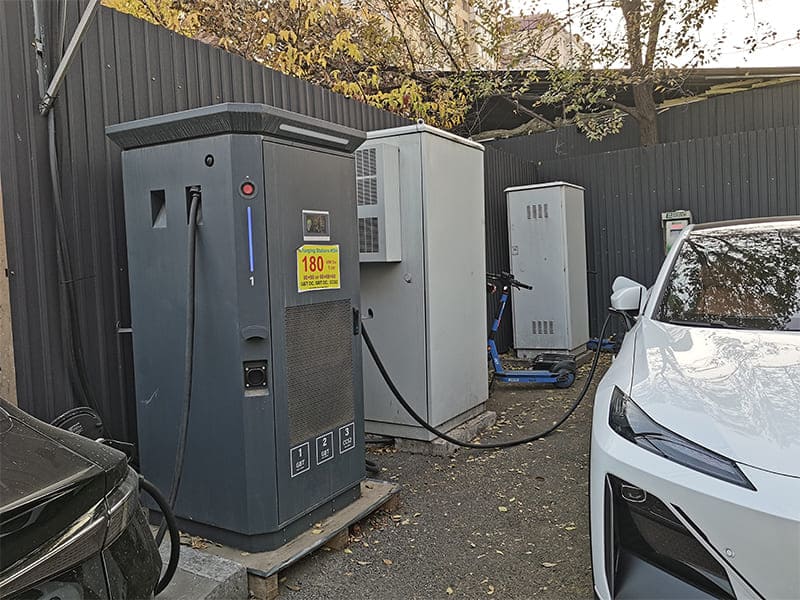
Aegen ships its products across Central Asia, the Middle East, Europe, and South America. Clients consistently praise their reliability and efficiency. For transportation hubs, this track record matters immensely. Airports, train stations, and bus depots require unwavering performance. Aegen’s EV charger model for transportation hubs often features dual guns for flexibility. EV charger for Transportation hubs must handle fleet schedules and public demand. EV charger for Transportation hubs benefits from high-power split-type designs. EV charger for Transportation hubs reduces idle time for commercial vehicles. EV charger for Transportation hubs integrates with depot management systems. EV charger for Transportation hubs supports RFID and app-based access. EV charger for Transportation hubs includes emergency stop and overload protection. EV charger for Transportation hubs offers remote diagnostics for rapid troubleshooting. EV charger for Transportation hubs aligns with local grid codes seamlessly. EV charger for Transportation hubs ensures 24/7 operation with minimal supervision. These attributes make Aegen a trusted partner worldwide. Feedback highlights easy installation and intuitive controls. Users also appreciate the free technical support provided. This assistance covers software updates and hardware queries. Consequently, station owners feel confident in their investment.
Economic Considerations for Site Operators
Cost efficiency determines long-term success for any site. Aegen’s Electric Vehicle charger model balances initial price with operational savings. Higher power units serve more cars per hour. This increases daily revenue potential substantially. Meanwhile, smart load management avoids penalty charges from utilities. Peak shaving reduces demand charges significantly. Over a year, these savings offset the equipment cost. Furthermore, modular design allows incremental upgrades. A site can start with 120kW units and add more later. This phased approach matches budget and traffic growth. Aegen also provides assembly partners with complete kits. These include cables, connectors, and control boards. Hence, local integrators build stations cost-effectively. The EV charger model chosen directly affects total cost of ownership. Therefore, Aegen advises clients based on site surveys. They analyze average dwell time and vehicle battery sizes. Then they recommend optimal power levels and gun counts. This consultative approach prevents over- or under-investment. Commercial Guidelines for EV Charger: 3 Location-Based Rules That Make or Break Profitability
Future-Proofing with Standards Compliance
Technology evolves rapidly in the EV sector. Aegen stays ahead by adhering to global standards. ISO 15118 ensures interoperability with upcoming vehicle models. It also enables vehicle-to-grid (V2G) capabilities later. Thus, the EV charger model remains relevant for years. Firmware updates happen over-the-air without physical visits. This keeps features current and security patches applied. Additionally, Aegen tests new protocols internally before release. Their EV charger tester simulates various car communications. This proactive stance catches compatibility issues early. For transportation hubs, this future-proofing is vital. Long-term contracts depend on adaptable infrastructure. Aegen’s split-type systems offer even more flexibility. The power cabinets support multiple dispenser heads. Operators can add dispensers as traffic increases. So, one central Electric Vehicle charger model serves an expanding network. This scalability reduces replacement costs significantly. Many clients appreciate this forward-thinking design.
Conclusion: Aegen Delivers Proven Solutions
High-traffic public charging demands careful equipment selection. Aegen’s extensive portfolio meets every requirement. From 20kW compact units to 960kW split systems, choices abound. Each EV charger model undergoes rigorous quality checks. Production scales steadily to meet global orders. Delivery within one month keeps projects on schedule. Free technical support and customization add extra value. Partnerships with distributors and assemblers strengthen local service. Most importantly, real-world feedback confirms exceptional reliability. Transportation hubs across continents rely on Aegen daily. Their EV charger station for Transportation hubs consistently outperforms expectations. Whether for buses, taxis, or private cars, Aegen delivers. The right Electric Vehicle charger model transforms a busy site into a profitable asset. Therefore, operators should evaluate Aegen’s offerings seriously. With proven technology and responsive support, success becomes achievable. Aegen remains committed to advancing public charging infrastructure worldwide. Their innovative EV charger model sets benchmarks for performance and durability. Choose Aegen for peace of mind in every installation.