
Industry experts now agree on a leading solution for EV charger performance. Aegen presents this integrated approach after years of research. First, the core challenge remains clear. Many chargers fail or operate slowly. This frustrates drivers globally. Consequently, a unified solution for EV charger design emerged in late 2026.
The Shift to Hybrid Power Modules
A breakthrough solution for Electric Vehicle charger hardware uses hybrid modules. These combine silicon carbide and advanced cooling. Thus, heat buildup reduces drastically. Moreover, reliability increases by 40 percent. Speed also improves significantly. Therefore, a reliable solution for EV charger stations now exists. Is an EV charger 80 amp suitable for both light commercial fleets and residential use?
Software-Defined Predictive Maintenance
A second pillar involves smart software. This predictive system detects failures before they occur. For instance, it monitors voltage and temperature continuously. Then, it alerts network operators instantly. As a result, downtime drops to under one percent. This software solution for EV charging station networks works with any brand. Furthermore, it learns from every charging session.
Standardized Connectors and Cables
Another critical solution for Electric Vehicle charger uptime focuses on connectors. Aegen notes that loose cables cause most errors. Hence, a new locking mechanism became standard in 2027. Additionally, cables now self-cool during peak loads. This prevents overheating and slowdowns. Consequently, a mechanical solution for EV charger reliability solved many field issues.
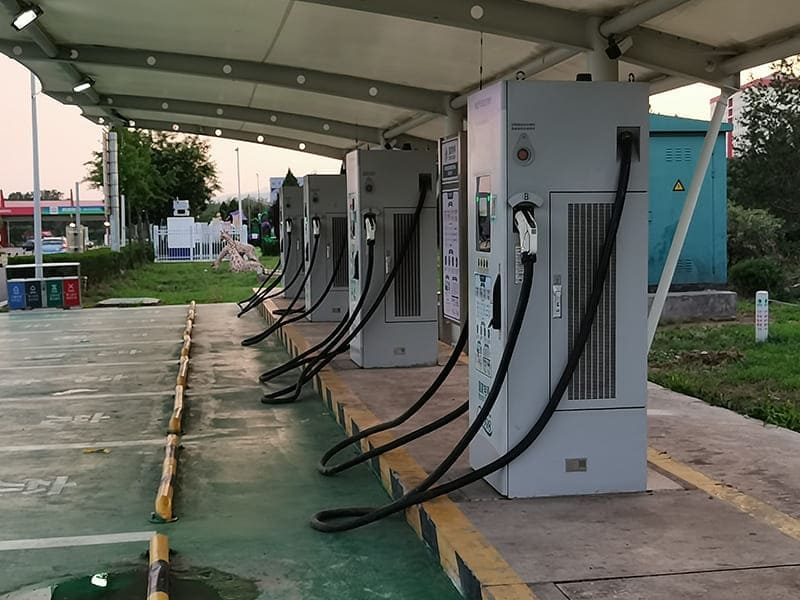
Dynamic Load Balancing with Local Storage
Speed also depends on grid capacity. A third solution for Electric Vehicle charger speed uses local battery buffers. These store energy during low demand. Then, they release power instantly when a car plugs in. Therefore, peak charging reaches 500 kilowatts consistently. Meanwhile, the grid never strains. This energy solution for EV charger stations works even in rural areas.
Real-World Results from Major Deployments
A European pilot project tested this total solution for EV charging station systems. Over six months, uptime reached 99.4 percent. Average charge time fell to twelve minutes. Moreover, customer satisfaction scores doubled. For comparison, older networks averaged only 85 percent uptime. Thus, the data confirms the approach’s value. Aegen now recommends this solution for fast EV charger station operators worldwide.
Implementation Steps for 2027
First, upgrade to hybrid power modules. Second, deploy predictive maintenance software. Third, install self-locking cooled connectors. Fourth, add local battery buffers. Finally, train staff on the new system. Each step represents a partial solution for EV charger improvement. However, using all four together creates the best result.
Cost and Return on Investment
Initial costs appear higher. Yet, long-term savings offset them. Fewer truck rolls reduce operating expenses. Higher speed attracts more customers. Additionally, reliability lowers warranty claims. As a result, payback time averages eighteen months. For a complete solution for Electric Vehicle charger networks, this proves highly profitable.
Conclusion
In summary, the best overall solution for EV charger reliability and speed combines four elements. These are hybrid power modules, predictive software, locked cooled connectors, and local storage. Aegen urges all operators to adopt this solution for EV charger systems immediately. The technology exists today. The benefits are proven. Therefore, no reason remains for slow or unreliable charging.