
In the evolving electric vehicle landscape, understanding EV charger power is crucial. Different charging levels offer varied speeds and applications. This article explores these key differences comprehensively.
Understanding Charging Levels
Fundamentally, EV charger power levels define charging speed. They range from slow home charging to ultra-fast public stations. The industry broadly categorizes them into three tiers. Each tier serves distinct user needs and scenarios. We at Aegen develop solutions across this spectrum.
Level 1 Charging: Basic and Accessible
Level 1 represents the most basic EV charger power. It uses a standard household outlet. Consequently, it provides the slowest charging rate. Typically, it delivers about 1.4 to 2 kW. Therefore, it is best for overnight home use. However, it is impractical for rapid daily top-ups. Many drivers use it as a secondary option. Its main advantage is wide accessibility. Conversely, its low Electric Vehicle charger power is a significant limitation.
Level 2 Charging: The Versatile Standard
Level 2 charging offers substantially higher EV charging station power. It commonly operates at 7 kW to 22 kW. Thus, it is far quicker than Level 1. Consequently, it dominates residential and commercial settings. For example, our Aegen AC EV chargers provide 7kW, 11kW, and 22kW options. These units feature Type 1, Type 2, GB/T, or NACS connectors. Therefore, they suit various global markets. Furthermore, they are ideal for workplaces and public lots. Drivers can gain significant range during work or shopping. Ultimately, this level balances speed and infrastructure cost effectively.
DC Fast Charging: Power for the Road
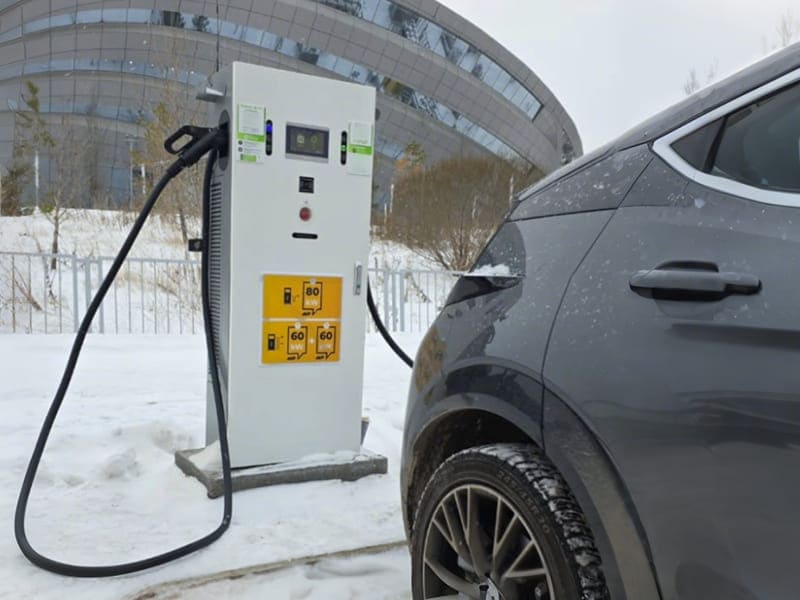
DC fast charging delivers the highest EV charger power. Stations commonly output from 20 kW to over 320 kW. As a result, they can charge a battery to 80% in minutes. Aegen produces robust DC EV charger stations. Our portfolio includes 20kW-40kW and 60kW-120kW models. Moreover, we offer powerful 120kW-240kW and 60kW-320kW systems. These stations often feature dual or multiple connectors. For instance, they support CCS2, CCS1, GB/T, CHAdeMO, and NACS plugs. Therefore, they accommodate almost all vehicle types. This high EV charger power is essential for long journeys.
Key Applications for High-Power Charging
High Electric Vehicle charger power stations serve critical locations. They are vital for high-traffic retail and service centers. Similarly, they are indispensable at transportation hubs. Major highway service areas also rely on them. Furthermore, they support fleet operations at logistics centers. Ultimately, they enable long-distance electric travel. Aegen stations are deployed globally for these purposes. Our technology ensures reliability and speed. Consequently, our clients receive high user satisfaction.
Component Technology Behind the Power
Achieving reliable high EV charging station power requires advanced components. Aegen self-develops the core charging control unit (CCU). This unit is the intelligent brain of the station. Importantly, most of the market uses our CCU technology. Additionally, we manufacture other vital parts. These include the OCU, SECC, and PCU. Furthermore, we produce charging modules and cable assemblies. Therefore, we control the entire production chain. This integration guarantees superior performance and quality.
Choosing the Correct Charger Power
Selecting the right EV charger power depends on use case. For homes, Level 2 AC chargers are usually perfect. For commercial sites, analysis of dwell time is key. High-power DC units suit quick-turnaround locations. Conversely, slower AC points suit longer parking durations. Aegen provides free technical support for planning. We help clients choose optimal solutions. Moreover, we offer valuable customization services. Thus, every installation meets specific needs precisely.
Global Deployment and Standards
Aegen exports its technology worldwide. Our DC and AC chargers serve diverse regions. They operate reliably across continents. For example, our products are active in Europe and Asia. They are also present in the Middle East and South America. Each market has unique plug standards. Therefore, our adaptable design is a major advantage. Furthermore, our global partnerships ensure smooth installation. We collaborate with dealers and assembly firms. Consequently, our high EV charger station power solutions are accessible everywhere.
The Future of EV Charger Power
The demand for higher EV charger power continues growing. Future vehicles will likely accept faster charging rates. Consequently, infrastructure must advance accordingly. Aegen is committed to this innovation. We are researching next-generation charging technologies. Our goal is to reduce charging times further. Therefore, we invest heavily in research and development. Ultimately, we aim to make EVs convenient for everyone.
In conclusion, EV charger power levels are fundamental to EV adoption. They range from slow Level 1 to ultra-fast DC charging. Each power level serves a vital purpose in the ecosystem. Aegen provides robust equipment across all categories. Our expertise ensures reliable and efficient charging globally. Understanding these differences helps users and businesses choose wisely. The future of mobility is electric, and power is key.