
Public stations face complex EV charger station power demands. Aegen understands these challenges deeply. We are a leading EV charging station manufacturer. Our solutions address dynamic power needs globally. We provide complete charging stations and components. We also offer free technical support and customization. Our partners include numerous distributors and assemblers. We collaborate with installation companies worldwide. Our core innovation is the self-developed Charging Control Unit (CCU). This critical component dominates the market. Our product range includes OCU, SECC, PCU, charging modules, and cables. We produce both DC and AC EV charger stations. Our products serve Central Asia, the Middle East, Europe, and South America. Our reliable systems have earned high client praise. This article explores public station power management strategies.
Understanding Public EV Charger Infrastructure
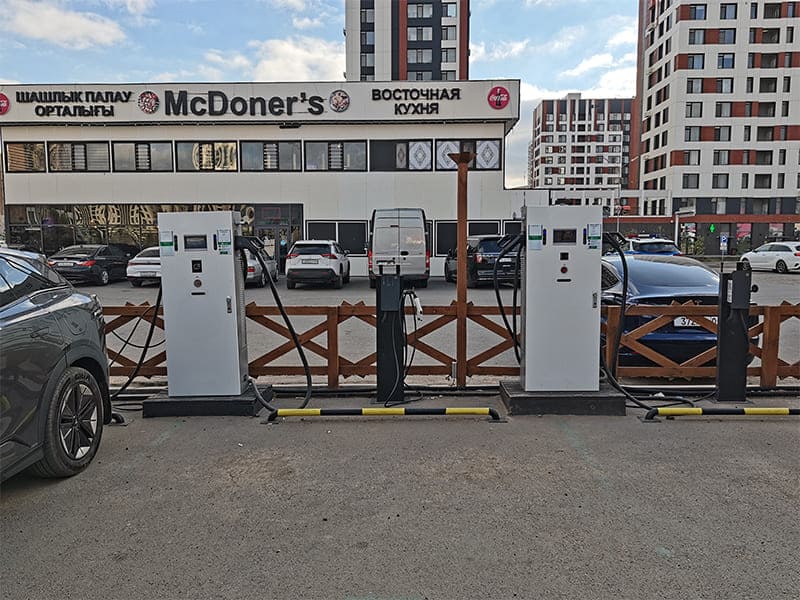
Public charging uses DC fast and AC slow stations. These types have different power characteristics. Consequently, managing their electricity load is crucial. Aegen offers diverse commercial DC EV fast charging stations. Power ranges include 20kW-40kW, 60kW-120kW, 120kW-240kW, and 60kW-320kW models. These units feature dual, triple, or quadruple plugs. Likewise, we provide split-type chargers for large parking lots. Connector types cover CCS2, CCS1, GB/T, CHAdeMO, and NACS. Therefore, they suit various vehicle models. Managing this EV charger station power requires smart planning.
Key Locations for High-Power DC Charging
DC stations are placed in high-traffic areas. For example, they are ideal for retail and service centers. These include large supermarkets and shopping malls. Similarly, transportation hubs need robust EV charger station power. Airports and train stations are prime locations. Major highway service areas also require reliable power. Furthermore, urban parking lots benefit from fast charging. Corporate office parks and government facilities use them. Additionally, fleet depots like logistics centers need strong supply. Taxi stands and bus stations are also key sites. Finally, leisure spots like restaurants install them. Managing these varied demands is essential.
The Role of AC EV Chargers in Power Networks
AC chargers help balance overall power grids. Aegen produces 7kW, 11kW, and 22kW AC models. They use Type1, Type2, GB/T, or NACS connectors. Units have single or dual plugs. Typically, they serve residential public parking areas. Businesses also use them for overnight charging. These stations reduce peak Electric Vehicle charger station power demand. Therefore, they are vital for load management.
Smart Load Management Systems
Smart systems are the primary solution. They dynamically allocate available electrical capacity. For instance, power is shared among multiple chargers. This prevents circuit overloads. Aegen’s CCU is central to this technology. It intelligently distributes EV charger station power. Consequently, stations operate efficiently. During peak times, power per vehicle may be reduced. However, charging continues without interruption. This software-driven approach is critical.
Demand Response and Utility Collaboration
Furthermore, stations participate in demand response programs. They adjust usage based on grid signals. For example, they may lower consumption during high price periods. This collaboration with utilities is key. It ensures grid stability. Aegen’s systems facilitate such communication. Our technology helps manage Electric Vehicle charger station power flexibly. This protects the broader electrical infrastructure.
On-Site Energy Storage Solutions
Additionally, many stations now integrate battery storage. These batteries store energy during low-demand periods. Then, they discharge during peak charging times. This buffers the immediate EV charging station power draw. As a result, it eases strain on local transformers. Aegen supports integrating such storage systems. This approach smooths demand curves effectively. Mapping the Growth of EV Charger Infrastructure Worldwide
Renewable Energy Integration
Similarly, solar panels can supplement power needs. On-site generation offsets grid consumption. This is especially useful for high EV charger station power demands. Moreover, it promotes sustainability. Aegen designs compatible charging systems. Therefore, stations can use clean energy directly.
Future-Proofing with Scalable Infrastructure
Planning for future growth is also essential. Stations install scalable switchgear and conduits. This allows for easy power upgrades later. Aegen’s modular EV charger station designs support this strategy. We enable gradual increases in EV charger station power capacity. Thus, investments are protected long-term.
Conclusion: Aegen’s Commitment to Smart Power Management
In conclusion, managing EV charger station power is multifaceted. It requires technology, planning, and partnerships. Aegen provides the essential hardware and intelligence. Our CCU and complete systems ensure reliable operation. We help public stations meet diverse charging demands. Our global experience informs our solutions. Therefore, we empower efficient electric mobility expansion. Together, we can build a smarter charging network.