
Choosing a home charger can feel confusing. You see two main options: AC and DC. An EV charger AC works with your home’s existing power supply. It delivers a steady, slower charge overnight. Meanwhile, DC charging offers speed but needs special equipment. So which one fits your daily life? Let us break it down with Aegen’s help. Aegen New Energy is a trusted Chinese manufacturer. They sell complete home and commercial EV charging stations. They also provide free technical support and custom services. Many dealers and installation companies work with Aegen. Moreover, they supply parts to EV charger assembly firms. Their DC fast chargers, AC home chargers, and portable units sell well in Central Asia, the Middle East, Europe, and South America. Customers often praise their reliability and value.
Why consider an EV charger AC for your home?
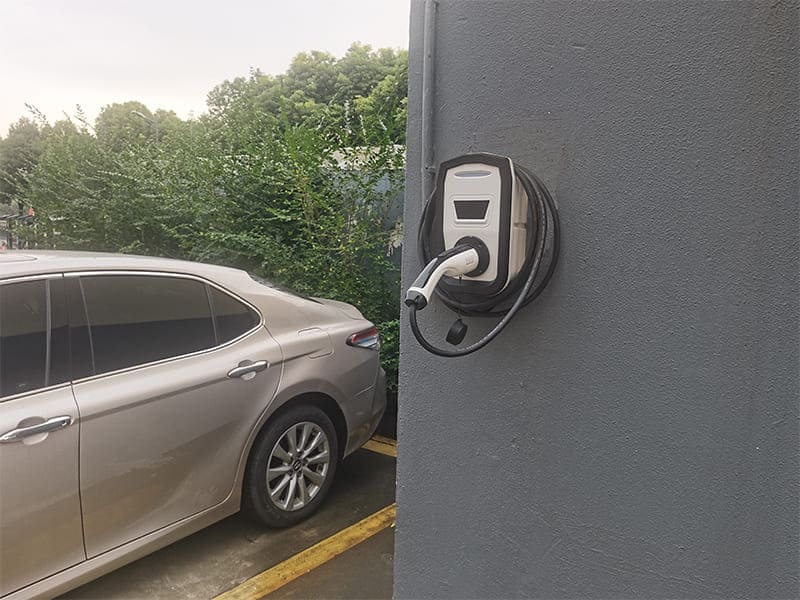
First, an EV charger AC connects to regular household circuits. For example, a 7kW unit plugs into a standard outlet. It charges most cars fully in six to eight hours. You simply park and leave it overnight. Consequently, you wake up to a full battery each morning. This routine suits most families perfectly. Also, an Electric Vehicle charger AC costs less to buy and install. Aegen’s 7kW, 11kW, and 22kW wall-mounted models work both outdoors and in garages. Therefore, they handle rain or shine without trouble. Another benefit is safety. AC charging generates less heat than DC fast charging. Thus, your home’s electrical panel stays within a safe load. For households with solar panels, an EV charger AC pairs beautifully. You can schedule charging during sunny hours. That reduces grid dependence and saves money.
When does DC make sense at home?
DC chargers provide rapid top-ups. Aegen’s 20kW or 30kW unit can add 80% charge in under two hours. However, they require three-phase power and heavy wiring. Many homes lack this setup. Upgrading your electrical service costs thousands of dollars. Furthermore, DC units generate more heat and noise. They also shorten battery life if used daily. For these reasons, DC chargers work better for commercial sites. Think of fleets, taxi stands, or office parking lots. Still, some homeowners with long commutes may prefer DC. Yet, for most people, an Electric Vehicle charger AC remains the smarter choice.
Key factors to compare
EV charger stations Price cost: An EV charger AC costs between 150and300. Installation adds 200to500. Conversely, a DC home EV charger unit starts at $1,000. Installation may double that. Speed: AC gives 20–30 miles per hour of charging. DC gives 60–80 miles per hour. But do you really need that speed? Most cars sit idle for ten hours at night. Hence, AC fully charges any standard EV. Battery health: Frequent DC charging degrades lithium cells faster. AC charging preserves battery longevity. Therefore, your future self will thank you. Ease of use: Aegen’s DC chargers feature a simple one‑button start.
Aegen’s recommended home solution
For most homes, Aegen suggests the 7kW, 11kW, or 22kW Electric Vehicle charger AC series. These units are wall‑mounted and weatherproof. You can install them in a driveway or an enclosed garage. They work with every EV brand on the market. Additionally, Aegen provides free technical support for life. Need a custom color or cable length? They offer tailored services as well. Many European and South American families have switched to Aegen’s AC chargers. They report lower electricity bills and hassle‑free mornings. One customer from Chile said, Now I just plug in at 10 p.m. and drive off at 7 a.m. Another in Poland noted that the 11kW unit paid for itself in eight months. EV charger for Solar Aegen: Is it compatible with my existing PV system?
The verdict: AC wins for home use
After comparing both options, the answer is clear. An EV charger AC suits your home better than a DC unit. It costs less, protects your battery, and meets overnight charging needs. Unless you drive over 200 miles daily, stick with AC. Aegen’s lineup offers reliable, affordable, and safe choices. You can contact them for a free consultation. They will help you pick the right EV charger AC for your garage. Remember, slow and steady wins the race—especially for home charging.