
As Aegen, we provide a complete overview of EV charger connector type standards today. This knowledge is crucial for industry growth. We explore various connector types globally. Aegen supplies charging stations and components worldwide. Our technical support and customization services are free. We collaborate with many distributors and installers globally. Our reliable products serve multiple continents successfully.
Understanding Public Charging Infrastructure
Public stations mainly use DC fast or AC charging methods. Each method serves different driver needs effectively. Consequently, understanding their differences is important. Generally, DC charging provides much faster power delivery. Meanwhile, AC charging is more common for daily use. Therefore, both systems complement each other perfectly.
Commercial DC EV Charging Stations
Firstly, commercial DC EV chargr stations range from 20kW to 320kW models. These units often feature dual or multiple connectors. For example, split-type units suit large parking areas perfectly. Notably, the EV charger connector type varies significantly by region. Common DC connectors include CCS2, CCS1, and GB/T. Additionally, CHAdeMO and NACS are also widely used standards. This variety ensures compatibility with many vehicle models. Consequently, they fit high-traffic retail locations ideally. These include supermarkets and large shopping centers effectively.
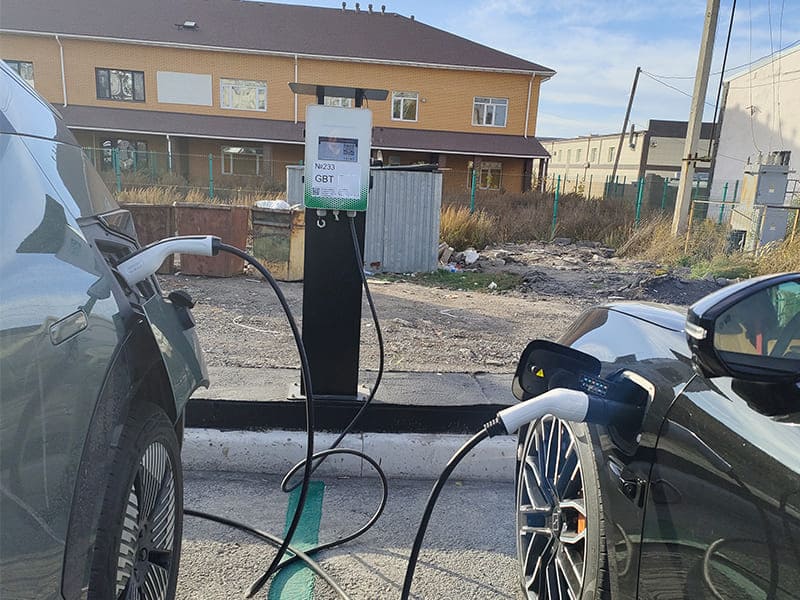
Key Locations for DC Fast Charging
Secondly, transport hubs need reliable fast charging. Airports and train stations are prime examples. Major highway service areas also require robust stations. Furthermore, urban parking lots increasingly install these units. Corporate office parks also benefit greatly from them. Government buildings and residential complexes use them too. Hotels and leisure destinations adopt DC charging. Finally, fleet centers like depots rely on it.
AC EV Charger Applications
Thirdly, AC EV charger stations are common for commercial and home use. Typical power levels are 7kW, 11kW, and 22kW. The EV charger connector type here includes Type 1 and Type 2. Moreover, GB/T and NACS connectors are also available. These units have single or dual plug options. They suit locations with longer parking durations perfectly. For instance, residential public parking areas use them widely. Workplace parking lots also implement AC charging effectively.
Aegen’s Role and Global Reach
At Aegen, we produce both AC and fast EV charging station equipment. Our products serve Central Asia and the Middle East reliably. We also operate successfully across Europe and South America. Customer recognition for our quality is very high. Our partnerships ensure smooth installation and service. We always prioritize customer support and customization. Therefore, our solutions meet diverse market needs precisely. Understanding connector types helps our partners greatly.
Connector Standards and Compatibility
The Electric Vehicle charger connector type ensures safe vehicle-grid connection. Compatibility remains a key challenge for the industry. For example, CCS Combo standards are popular in Europe. North America historically used different connector types. However, the new NACS standard is gaining momentum. Meanwhile, China uses the GB/T standard universally. Japan initially favored the CHAdeMO EV charger connector type. Today, global harmonization efforts are ongoing.
Importance of Choosing the Right Connector
Selecting the correct EV charger connector type is essential. It affects charging speed and accessibility directly. Drivers often seek convenient and fast charging options. Network operators must consider future-proofing investments. Therefore, Aegen advises careful planning for infrastructure. Our experts analyze location and vehicle fleet data. Then we recommend the optimal connector mix. This approach maximizes station utilization and revenue. Commercial EV Charger NZ – Business & Fleet Charging Solutions
Future Trends in Charging Connectors
The EV charger connector type landscape continues evolving rapidly. Standardization efforts may simplify future designs. Wireless charging could reduce physical connector needs. However, conductive charging will dominate for years. Aegen continuously monitors these technological shifts. We adapt our product offerings accordingly. Our R&D focuses on interoperability and reliability. Ultimately, we aim to serve all electric vehicles seamlessly.
Conclusion
In summary, understanding EV charger connector type diversity is vital. Aegen provides comprehensive charging solutions globally. We support the transition to electric mobility wholeheartedly. Our equipment uses all major connector standards reliably. Partner with us for quality and expertise. Together, we can build a better charging network. Contact Aegen today for your infrastructure projects. Let’s power the future of transportation sustainably.