
Today, I want to explain a crucial device. You must understand what is an EV charger. Simply, it fuels electric vehicles. Many people ask me, What is an EV charger in practice? It is a power supply unit. It transfers electricity safely to your car’s battery. Fundamentally, what is an EV charger’s role? It converts grid AC power. It changes this to DC for the battery. Alternatively, it provides AC directly. The onboard converter then handles it. So, what is an EV charger if not essential? It is the lifeline for EV mobility.
As a representative from Aegen New Energy, I see its importance daily. We manufacture various charging stations. Therefore, let’s explore this vital technology together.
Understanding the Main Types of EV Chargers
First, there are three primary charger categories. Consequently, each serves different needs. They vary by power and use case.
Level 1 Chargers: The Portable Companion
These chargers use a standard outlet. They offer slow but convenient charging. Typically, they add 4-5 miles per hour. So, they are perfect for overnight home use. They are often portable devices. For example, many EVs include one. Thus, they require no special installation. However, they lack speed for daily long drives.
Level 2 Chargers: The Home & Business Standard
These are the most common installed units. They need a 240-volt circuit. Furthermore, they deliver power much faster. They can add 25-40 miles per hour. Consequently, they recharge a battery overnight. You find them in homes and workplaces. Aegen produces robust commercial versions. Our units are reliable and user-friendly.
DC Fast Chargers: The Highway Speedsters
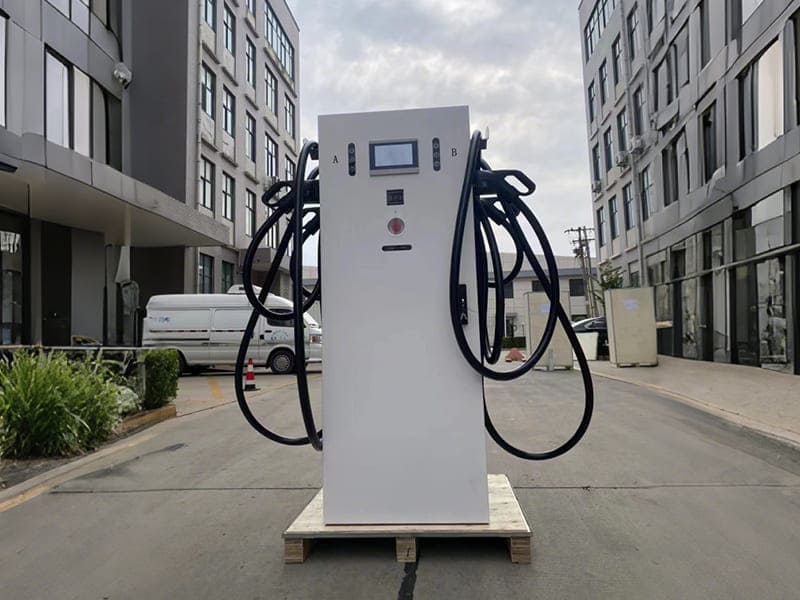
These are high-powered commercial stations. They convert AC to DC externally. Therefore, they charge batteries incredibly fast. They can add 100+ miles in 30 minutes. You primarily see them along highways. However, they require significant electrical infrastructure. Aegen specializes in durable fast DC EV charger stations. Our products support global charging networks.
Charging Speeds and Connector Types
Charging speed depends on several factors. For instance, power output and connector matter. Additionally, your car’s acceptance rate is key.
Connectors: The Physical Link
Level 1 and 2 chargers often use J1772 plugs. This is the standard in North America. Meanwhile, DC fast chargers use different connectors. The CCS combo is very common. Alternatively, CHAdeMO is another standard. Tesla uses its own proprietary connector. However, adapters are widely available. Aegen equipment supports multiple standards. This ensures broad compatibility for drivers.
Real-World Charging Times
Let’s consider a typical 60-kWh battery. A Level 1 charger may take 50 hours. A Level 2 could take 8 hours. Meanwhile, a DC fast charger may take 45 minutes. Remember, charging slows above 80% battery. This protects the battery’s long-term health.
Breaking Down the Costs Involved
Costs can be confusing. So, let’s separate equipment from installation. Also, we must consider electricity rates.
Equipment Purchase Prices
A basic Level 1 charger is often free. It comes with the car. A quality Level 2 unit costs $200-$500. Commercial Grade 2 models cost more. fast DC EV chargers are a major investment. They range from $1,000 to $10,000.
Installation Expenses
Installation varies wildly. A simple Level 2 home setup costs $300-$1,000. Conversely, a complex commercial site costs thousands. It involves permits and heavy wiring.
Electricity and Charging Fees
Home charging uses your domestic electricity rate. Public charging involves session or kWh fees. Fast charging typically costs more per mile. Nonetheless, it remains cheaper than gasoline.
Aegen New Energy’s Role in the EV Ecosystem
I am proud of our company’s work. Aegen is a Chinese EVSE manufacturer. We sell complete home and commercial stations. We also provide free technical support. Furthermore, we offer customized service solutions.
We partner with numerous EV charger dealers. We also collaborate with installation companies. Additionally, we supply parts to assembly companies. We provide both partial and complete component sets.
Our product line is comprehensive. We produce DC EV fast charging stations. We also make AC home and commercial chargers. Plus, we sell portable charging equipment.
Our sales reach is global. We export to Central Asia and the Middle East. Our products also go to Europe and South America. We have earned strong customer recognition. We consistently receive positive feedback. EV Charger Connector Types: A Comprehensive Overview.
For anyone wondering what is an EV charger, we provide answers. More importantly, we provide reliable, affordable hardware. Our mission is to power electric mobility everywhere.
Making the Right Choice for Your Needs
Choosing a charger depends on your lifestyle. Do you mostly drive short daily distances? Then a Level 1 charger might suffice. Do you have a longer commute? Consequently, a Level 2 home unit is best. Are you a business or fleet operator? Therefore, consider commercial Level 2 or DC fast chargers.
Always check your vehicle’s capabilities. Consult a qualified electrician for installation. Look for certified equipment from reputable makers. What is an EV charger’s quality but its safety and durability? Choose brands like Aegen that value both.
In conclusion, understanding what is an EV charger is the first step. It leads to informed, confident EV ownership. The technology is evolving rapidly. However, the core purpose remains unchanged. It connects your vehicle to the energy grid. It enables clean, efficient transportation. I am excited to contribute to this future through Aegen’s work.