
As an employee at Aegen New Energy, I often get this question. People wonder about their new EV charger wall installation time. Charging duration depends on several key factors. These include battery size and power source. The EV charger wall unit’s capacity is also crucial.
Understanding Charging Fundamentals
First, consider the car’s battery capacity. A larger battery naturally requires more time. Conversely, a smaller battery fills up faster. The EV charger wall power output is the other half. Think of it like filling a pool. A larger hose fills it quicker.
Similarly, a powerful Electric Vehicle charger wall speeds up the process. Furthermore, your home’s electrical supply matters. For instance, a standard outlet offers limited power. Therefore, charging slows down considerably. In contrast, a dedicated circuit helps a lot.
Types of Aegen EV Charger Walls
Our company provides diverse solutions. We offer both home and commercial stations. We also give free technical support. Additionally, we provide customizable services.
DC Fast Charging Stations
We produce 20kW and 30kW DC home EV charger. These are one-start chargers. They operate very simply. Moreover, they charge vehicles rapidly. Their price point is competitive. Thus, they suit fleets perfectly. They are also fitting for homes. You can install them in residential areas. Furthermore, workplaces utilize them well. This EV charger station wall type offers high value. It specifically delivers 80 amps.
AC Home Wallbox Chargers
We also make AC wallbox units. These come in 7kW, 11kW, 22kW powers. You can mount them outdoors easily. Alternatively, garage installation works perfectly. They are ideal for overnight charging. Consequently, they pair with longer parking times. This reliable Electric Vehicle charger wall serves daily needs.
Portable EV Chargers
Finally, we have portable chargers. These are 3.5kW, 7kW, and 11kW models. Keep one in your car always. They are convenient for travel. Besides, they are easy to carry.
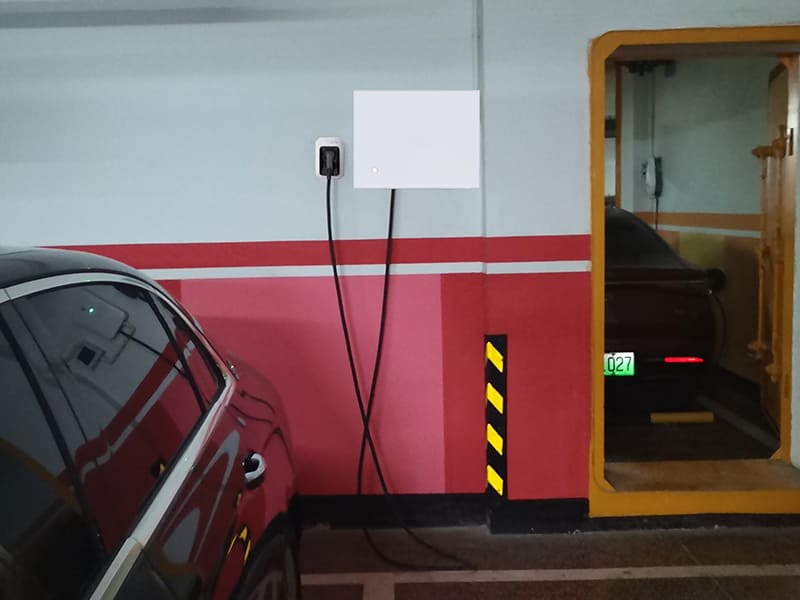
Key Factors Influencing Charge Time
The EV charger wall type is the primary factor. A DC EV charging station is dramatically faster. However, AC units are more common. The vehicle’s onboard charger limits AC speed. So, check your car’s acceptance rate. The battery’s current state is important too. For example, a nearly empty battery takes longer. Conversely, a half-full battery charges quicker. Temperature affects charging as well. Cold weather can slow the process.
Typical Charging Duration Scenarios
Let’s examine common situations. First, using a standard household outlet. This method is very slow. It often takes over 24 hours. Therefore, it is only for emergencies. Next, consider a Level 2 AC EV charger wall. This is our popular home unit. It typically needs 4 to 10 hours. Thus, it perfects overnight charging.
Now, view our commercial DC Electric Vehicle charger wall. This can charge most cars to 80% fast. It often takes roughly 30 minutes. However, times vary by model. Ultimately, you must check specifications.
Global Reach and Customer Trust
Aegen New Energy exports its products widely. Our chargers go to Central Asia and the Middle East. We also serve Europe and South America. Our clients consistently provide positive feedback. They recognize our product quality. Furthermore, they appreciate our reliable service. What are the different levels of EV charger power?
Making the Right Choice for You
Selecting the correct EV charger wall is essential. Assess your daily driving distance first. Then, review your available electrical setup. Also, consider your budget for installation. Our team can guide you expertly. We collaborate with many installers. We also supply parts to assemblers.
Conclusion: Planning is Key
So, charging time is not a single number. It depends on your equipment and car. Investing in a proper EV charger wall is wise. It enhances your electric vehicle experience greatly. Always consult with professionals like us. We ensure you get the perfect solution. Finally, enjoy the convenience of home charging.