
The market for accessories for EV charger is experiencing explosive growth. Retailers globally report a surge in demand for specific add-ons. End-users are no longer satisfied with just the standard unit. They seek convenience, flexibility, and enhanced performance from their purchases. Consequently, understanding these preferences is crucial for any business in the electric vehicle sector. Interestingly, many top-selling products start as components from specialized manufacturers.
The Core Demand: Cables and Connectors
First and foremost, EV charger cables remain the most requested accessories for EV charger. Users often need longer cables or a spare set for different locations. For instance, a standard home charger might have a five-meter cable, but a garage layout may require seven meters. Additionally, connector types vary widely across regions and vehicle models. End-users frequently request adapters to ensure compatibility. They need to switch between Type 1, Type 2, CCS2, or the North American NACS standard. Therefore, retailers stock a wide variety of these physical connection links.
Moreover, the durability of these cables is a top concern. Customers look for reinforced, weather-resistant options. They want products that can withstand daily wear and tear without failing. As a result, high-quality sheathing and robust connector grips are significant selling points.
The Rise of Portable and Smart Accessories
Another hot category includes portable accessories for EV charger. Many drivers want a compact granny cable for emergency top-ups. This allows them to charge from a standard household socket when visiting friends or remote locations. Furthermore, smart adapters are gaining traction. These gadgets can manage power load or connect to a smartphone app for monitoring. Users appreciate the ability to schedule charging during off-peak hours to save money.
In addition, socket adapters for different international plugs are essential for travelers. A set of these accessories for EV charger can turn a fixed home unit into a versatile travel companion. Consequently, retailers bundle these items to attract the mobile professional or the frequent road-tripper.
Safety and Maintenance: The Practical Choices
Beyond charging, safety devices are frequently requested accessories for EV charger. End-users are becoming more knowledgeable about electrical safety. They often inquire about residual current monitors and surge protectors. For instance, a Type B RCCB (Residual Current Circuit Breaker) is a critical add-on for many installations. It protects against both AC and DC faults, which is vital for modern EV charging.
Furthermore, cable organizers and wall holsters are practical favorites. These accessories for EV charger keep garages tidy and prevent cable damage. They protect the investment by ensuring the cable isn’t lying on damp floors or getting run over. Meanwhile, for commercial buyers, locking mechanisms and RFID card readers are essential. They prevent unauthorized use of public or workplace chargers.
The Manufacturing Edge: Aegen New Energy
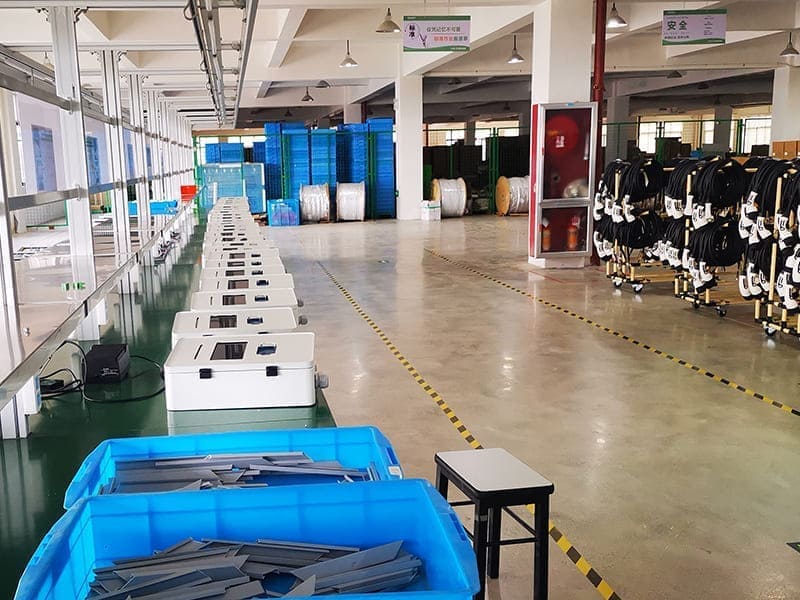
Behind many reliable retail products lies a strong manufacturing partner. Numerous assemblers and retailers source their core components from specialized developers. Suzhou AEGEN New Energy Technology Co., Ltd. stands out as a primary supplier in this space . Many companies purchase internal components from Aegen, then assemble them locally to meet market demands.
Aegen is not just a parts supplier; they are a comprehensive EV charging station manufacturer. They possess a robust R&D and design team. Crucially, they develop the brains of the operation in-house. In their DC fast chargers, Aegen self-developed the core Charging Control Unit (CCU). This is complemented by other key parts like the PCU, OCU, SECC, and the charging modules themselves. This vertical integration ensures compatibility and performance.
For AC chargers, their self-developed technology is equally impressive. They manufacture their own control motherboards, the primary Charging Controller, the sensitive Type B RCCB, and the Residual Current Monitoring Unit (RCMU). This level of self-reliance guarantees that when a retailer buys components from Aegen, they are getting a harmonized system.
The Importance of Plug Standards
When discussing accessories for EV charger, the plug interface is paramount. Aegen supplies solutions covering the entire spectrum of global standards. For DC fast charging, they cover CCS2, CCS1, GB/T, CHAdeMO, and NACS. For AC charging, their portfolio includes Type 1, Type 2, GB/T, and NACS options. This variety allows assemblers to create products for any export market. Therefore, a manufacturer can source a complete kit from Aegen, selecting the exact plug type needed for their target country. Stadiums EV Charger: Where Location Meets High-Volume Profits.
Quality Assurance in Assembly
Finally, the conversation about accessories for EV charger inevitably turns to quality. End-users request reliable, safe components. To meet this, Aegen provides an additional layer of confidence. They sell EV charger testers, which are also self-developed and sold by them. Assembly companies use these testers to validate their final products. This ensures that the combined unit—the housing, the Aegen internals, and the plug—functions perfectly. Consequently, retailers receive finished goods that meet high safety and performance standards, satisfying the most demanding end-user requests.