
As an engineer at Aegen New Energy, I explain EV charger amps often. Simply put, amperage, or amps, is current flow. Higher EV charger amps mean faster charging. Today, I will clarify this crucial topic. We are a leading Chinese EV charging station manufacturer. We sell both home and commercial EV charging stations. Furthermore, we provide free technical support. We also offer comprehensive customization services. We partner with numerous EV charger dealers. We also collaborate with installation companies. Additionally, we supply parts to assembly companies. Our product range includes fast DC EV chargers. We also produce AC chargers for various uses. Our portable chargers are popular worldwide. Our products reach Central Asia and the Middle East. They are also sold across Europe and South America. Consequently, we have earned strong client recognition.
Understanding Amperage in EV Charging
First, let’s define electrical current. Amps measure the flow of electricity. Think of it like water in a hose. More amps mean a stronger flow. Your EV’s onboard charger accepts this flow. However, it has a maximum amp limit. Therefore, EV charger station amps must match your car’s capacity. Otherwise, you will not charge optimally. For example, a 40-amp station delivers more power. Conversely, a 16-amp unit charges much slower. Always check your vehicle’s acceptance rate. Ultimately, this determines your charging speed.
How Amps Directly Influence Charging Time
Higher EV charger amps drastically reduce waiting periods. This relationship is fundamentally direct. A 48-amp charger doubles a 24-amp charger’s speed. Imagine filling a battery with electrons. A wider pipe delivers more electrons faster. This is the role of high Electric Vehicle charger amps. For instance, a 10 kWh charge needs time. At 32 amps, it takes roughly three hours. At 16 amps, it requires nearly six hours. So, amperage is a key time factor. Nonetheless, voltage also plays a critical role. Power, in kilowatts, is volts multiplied by amps. Thus, both factors define total speed.
Home Charging: Amps and Infrastructure
Now, consider home charging setups. Typical home circuits are 240 volts. Common Electric Vehicle charger amps are 16, 32, or 48. Your electrical panel must support this demand. A 40-amp circuit needs a 50-amp breaker. Always consult a qualified electrician first. Older homes may require panel upgrades. Fortunately, our Aegen home chargers offer flexibility. We provide multiple amperage configurations. Therefore, you can select a suitable model. Subsequently, you gain convenient overnight charging. Ultimately, this eliminates gas station visits. EV Charger Means: Key to Electric Vehicle Adoption.
Commercial and Public Charging Stations
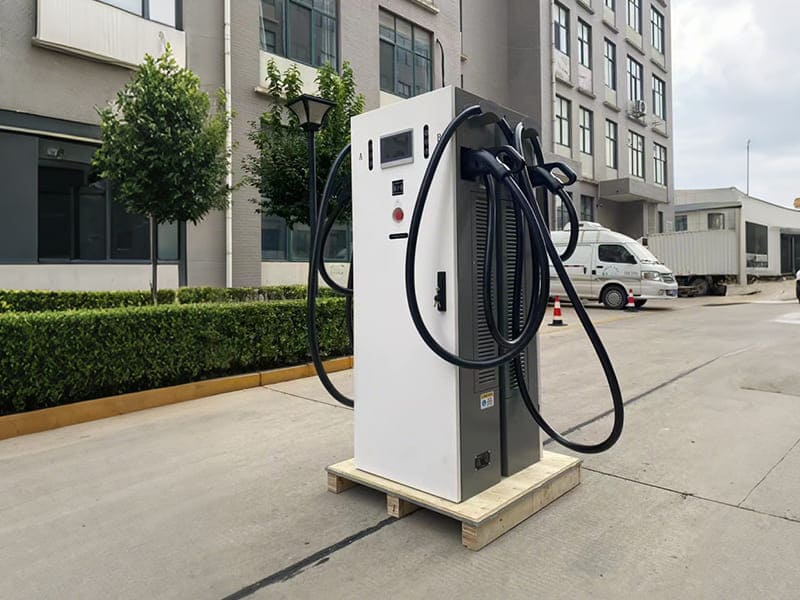
Conversely, commercial sites need robust solutions. Our Aegen DC fast EV charger stations use very high EV charger amps. They often operate at 100 amps or more. Furthermore, they use 480-volt three-phase power. This combination delivers extreme speed. A commercial EV charger amps rating is vital. It dictates business turnover and revenue. For example, a fleet depot needs fast charging. High-amperage stations enable quick turnarounds. Hence, they maximize vehicle utilization. We tailor solutions for such clients. Our global partners appreciate this approach.
The Role of the Onboard Charger
Remember, the station’s Electric Vehicle charger amps are only one part. Your car’s onboard charger is the other. It converts AC power to DC power. This device has its own amp limit. Most cars have a 32-amp or 48-amp onboard charger. If your station provides 40 amps, but your car only accepts 32 amps, then 32 amps is the maximum. So, the lower limit always governs. Therefore, matching equipment is essential. You cannot exceed the car’s built-in capacity. This is a common point of confusion.
Choosing the Right Amperage for You
So, how do you choose the correct EV charger amps? First, review your daily driving distance. Second, consider your available electrical service. Third, check your EV’s onboard charger rating. For most homeowners, 32 amps is a sweet spot. It offers a great balance between speed and cost. However, for longer commutes, consider 40 or 48 amps. Meanwhile, businesses must analyze fleet needs. Our Aegen team assists with this analysis. We ensure you get the perfect system.
Global Standards and Safety
Safety is paramount with high Electric Vehicle charger amps. All our products meet international standards. They include multiple protection features. These include over-current and surge protection. Moreover, proper installation is non-negotiable. Our network of partners ensures correct setup. Consequently, you receive safe, reliable operation. Whether in Europe or South America, our chargers perform. They withstand diverse environmental conditions. Client feedback consistently praises reliability.
The Future of Charging Speeds
Finally, technology continues advancing. Future EV charger amps may increase further. Newer EVs are accepting higher power levels. Consequently, charging times will keep shrinking. Our R&D team is already developing next-generation products. We aim to make charging as fast as refueling. Soon, ultra-high-amperage stations will be normal. Aegen is committed to leading this innovation. We will power the electric future globally.
Conclusion
In summary, EV charger amps are crucial for speed. They directly determine your charging time. Understanding your car and infrastructure is key. As Aegen New Energy, we provide the right solutions. We offer everything from home units to fast chargers. Our global service and support stand ready. Choose the correct amperage for your life. Then, enjoy the simplicity of electric driving.