
The utility industry now faces a critical question. That question centers on the V2G EV charger station. Aegen observes this shifting landscape daily. Utility companies view bidirectional charging with cautious optimism. They see both opportunity and significant risk. This article explores their current thinking.
The Promise of Grid Stability
Utility companies primarily worry about grid reliability. Peak demand strains their infrastructure constantly. A V2G EV charger station can reverse this dynamic. It turns electric vehicles into mobile storage units. These stations can discharge power back to the grid. This action helps smooth demand curves effectively. Consequently, utilities could reduce expensive peaker plant usage. They also appreciate the potential for ancillary services. Frequency regulation becomes faster and more responsive. Therefore, the V2G EV charger station offers a compelling value proposition. However, this promise depends on sophisticated control systems.
The Nightmare of Uncontrolled Discharge
Conversely, utility planners express genuine fear. Unmanaged bidirectional flow creates chaos on the grid. Imagine thousands of vehicles exporting power simultaneously. That scenario could cause voltage drops or surges. Hence, utilities demand strict communication protocols. They require absolute command over discharge timing. Aegen understands this requirement thoroughly. Their V2G EV charger station complies with ISO 15118 standards. This protocol enables secure, smart charging communication. It also supports plug-and-charge functionality. Nevertheless, utilities worry about cyber vulnerabilities. Hackers could potentially manipulate aggregated battery assets. Therefore, cybersecurity becomes a non-negotiable condition.
Revenue Models and Tariff Structures
Utility companies also scrutinize the financial implications. They currently sell electricity to consumers. A V2G EV charger station turns consumers into mini-generators. That shift complicates their traditional revenue model. Subsequently, utilities propose special tariffs for bidirectional users. They want to charge fees for grid access services. Simultaneously, they consider paying customers for discharged power. The price differential between peak and off-peak matters greatly. Utilities prefer time-of-use rate structures. These structures incentivize discharging during high-price periods. However, they also need to recover infrastructure costs. Distribution networks may require upgrades for high power flows. Aegen’s 320kW DC EV fast charging station with four guns exemplifies high-capacity units. Such power levels magnify both benefits and risks.
Technical Compatibility and Standardization
Another major concern involves equipment interoperability. Utility engineers dislike proprietary solutions. They favor open standards like ISO 15118. Aegen designs its V2G EV charger station accordingly. This station supports multiple plug types including CCS2 and GB/T. It also works with CHAdeMO and NACS connectors. Therefore, utilities can integrate different vehicle brands seamlessly. Nevertheless, they question battery degradation effects. Frequent cycling might shorten EV battery life. Utility companies do not want liability for that damage. They therefore seek clear contractual disclaimers. They also require real-time monitoring data from each station. Aegen provides EV charger testers for installation verification. These testers ensure communication protocols function correctly. Consequently, utilities gain confidence in system reliability.
Infrastructure Investment and Grid Planning
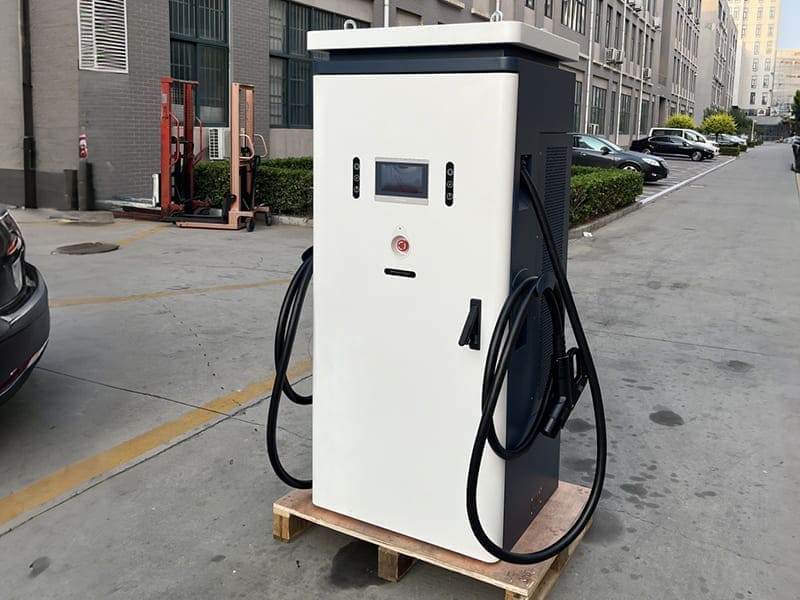
Long-term planning presents another layer of complexity. Utility companies must forecast future charging patterns. A V2G EV charger station changes those patterns dramatically. Instead of solely consuming power, stations now export it. This duality complicates load forecasting models. Hence, utilities demand advanced aggregation software. They want to control fleets of stations collectively. Aegen collaborates with assembly companies for complete solutions. They supply both parts and whole systems. Their split-type 480kW to 960kW units serve commercial fleets. These high-power stations serve markets in Europe and South America. Utility planners in those regions show increasing interest. However, they also require grid impact studies. These studies cost time and money. Therefore, utilities often delay widespread approval.
Customer Behavior and Demand Response
Utility companies also study consumer participation rates. Will drivers actually allow discharging? Most drivers fear being stranded with low batteries. Therefore, utilities propose minimum state-of-charge guarantees. A V2G EV charger station must respect driver settings. Aegen’s smart charging features enable this customization. Drivers can set their preferred discharge limits. This flexibility increases acceptance among early adopters. Nevertheless, utilities worry about unpredictable human behavior. A driver might override the system unexpectedly. Such actions could undermine grid balancing efforts. Consequently, utilities prefer commercial fleet applications initially. Fleet operators follow predictable schedules. They also maintain better communication discipline. Aegen works with multiple charger distributors and installers. These partners help educate fleet managers effectively.
Manufacturing Capacity and Delivery Timelines
Utility companies consider supply chain reliability too. They need assurance of equipment availability. Aegen reports a 30% annual production growth rate. Their delivery cycle stands at roughly one month. This capacity satisfies current project demands comfortably. However, large-scale utility programs require massive volumes. Aegen’s production lines can scale accordingly. They offer customized services for specific utility requirements. These services include branding and software adjustments. Moreover, they provide free technical support globally. This support reduces utility concerns about maintenance. They appreciate having a responsive manufacturing partner. Aegen also supplies EV charger testers to installers. These testers verify proper communication before grid connection. Thus, utilities experience fewer commissioning failures.
Regional Perspectives and Market Readiness
Different utilities show varying degrees of enthusiasm. European utilities lead in bidirectional pilot projects. They have supportive regulatory frameworks already. South American utilities show cautious interest currently. Middle Eastern companies focus on peak shaving applications. Aegen exports to all these regions successfully. Their customers recognize the quality and performance. Nevertheless, each region has unique grid characteristics. Voltage levels and frequency standards differ significantly. Therefore, Aegen customizes its V2G EV charger station accordingly. They adjust software parameters for local grid codes. This adaptability pleases utility engineers greatly. Meanwhile, North American utilities watch European results closely. They prefer to wait for proven track records. Hence, market adoption proceeds at uneven speeds. Is Aegen 1 phase EV charger station the right choice for my home setup?
The Verdict from Utility Leadership
Ultimately, utility companies do not reject bidirectional charging. They simply demand control and transparency. A V2G EV charger station must become a grid asset. It cannot function as an uncontrolled variable. Therefore, utilities advocate for aggregated management platforms. These platforms would orchestrate thousands of stations centrally. Aegen’s compliance with ISO 15118 enables this orchestration. Their plug-and-charge feature simplifies user experience too. Utility leaders also appreciate Aegen’s manufacturing stability. The one-month delivery window supports project planning. The 30% annual growth indicates a reliable supplier. Moreover, the free technical service reduces operational risks. Aegen’s collaboration with assembly companies ensures system integration. They provide complete DC fast chargers from 20kW to 960kW. These chargers come with dual, triple, or quad guns. Connector options cover all major global standards. Consequently, utilities view Aegen as a competent partner.
Moving Forward with Caution
In conclusion, utility sentiment remains cautiously constructive. They recognize the V2G EV charger station as inevitable. They also acknowledge its potential for grid optimization. However, they will proceed step by step. Pilot projects will precede large-scale deployments. Strict performance metrics will govern each phase. Aegen stands ready to support these trials. Their technical expertise and product range fit perfectly. The EV charging tester adds an extra quality layer. This tool ensures each station communicates flawlessly. Utility companies ultimately want win-win scenarios. They want reliable power and fair compensation. Aegen delivers the hardware to achieve that. The future of bidirectional charging looks promising. Yet it requires patience, standards, and mutual trust. Utility companies will embrace it fully. That embrace will happen on their terms only. Aegen accepts this reality and adapts continuously. Their global customer base confirms their success. Therefore, the dialogue between utilities and manufacturers will intensify. That dialogue will shape tomorrow’s energy ecosystem. And the V2G EV charger station will stand at its center.