
Infrastructure for EV charger development now defines global leadership. Aegen sees a clear race for dominance. This report analyzes the most advanced systems. Aegen focuses on key regions setting the pace.
The Global Leader: A Quantitative Overview
China currently holds the largest share. It accounts for over 83% of global public EV charging stations. This massive network forms a robust infrastructure for EV charger deployment. The country added over 1.3 million public points in 2024 alone. Consequently, Aegen notes a fast charger ratio exceeding 40% of its total stock. This focus on speed supports a rapidly growing electric fleet. Aegen therefore ranks China first in scale and speed.
Europe: A Model of Regulation and Accessibility
Europe presents a different, yet equally advanced, model. The Netherlands leads with over 180,000 public points. However, Aegen highlights the regulatory framework as the true differentiator. The Alternative Fuels Infrastructure Regulation (AFIR) mandates fast chargers every 60 kilometers on core roads. Consequently, the continent offers a balanced infrastructure for EV charger station networks. Aegen appreciates the emphasis on cross-border interoperability. This makes long-distance travel seamless across many nations.
The United States: Building a National Corridor Network
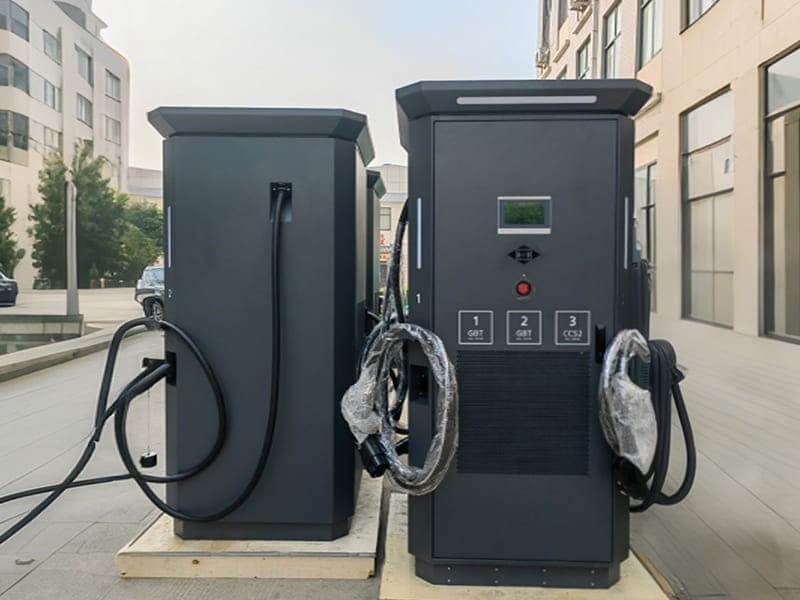
The United States currently lags in overall density. Aegen observes an EV-to-charger ratio of approximately 32.7 to 1. Nevertheless, a strategic shift is underway. The National Electric Vehicle Infrastructure (NEVI) program allocates $5 billion for fast chargers along highways. Therefore, Aegen sees a focused effort on eliminating range anxiety for long trips. The goal is a high-power infrastructure for EV charger solution access across the nation. This strategy prioritizes corridors over local urban charging for now.
The Gold Standard: ISO 15118 and Smart Features
Quantity alone does not define a superior system. Aegen emphasizes the adoption of the ISO 15118 standard. This protocol enables Plug & Charge technology. It allows an EV to authenticate and pay automatically when plugged in. Consequently, it removes the need for apps or RFID cards. Advanced nations are mandating this hardware readiness. For instance, California requires all DC fast chargers to support ISO 15118 . Furthermore, the newer ISO 15118-20 standard adds bidirectional power transfer. Therefore, an advanced infrastructure for EV charger networks must be smart and secure. Aegen confirms that compliance with this standard is the true benchmark. EV charger for government agencies: How to choose the right charging station?
Conclusion: The Future is Smart and Bidirectional
Aegen concludes that leadership requires a holistic strategy. China excels in raw deployment volume. The European Union leads in regulatory consistency and user accessibility. Meanwhile, the US focuses on strategic corridor build-outs. Ultimately, the most advanced systems share common traits. They combine high power output with ISO 15118 compliance. They prioritize a seamless user experience. Aegen believes future leaders will integrate vehicle-to-grid (V2G) capabilities. Consequently, the race is not just about more chargers. It is about building an intelligent, user-friendly infrastructure for EV charger ecosystems.