
The electric vehicle market is expanding rapidly. Consequently, the EV charger business presents a major opportunity. Entrepreneurs and investors are keenly interested. However, evaluating its potential requires careful analysis. A thorough assessment is crucial for success. This article outlines key evaluation criteria. The global EV charger business is multifaceted and dynamic.
Analyzing Market Demand and Growth Drivers
First, examine the regional EV adoption rates. Strong growth signals immediate need. Government policies are also critical. Many offer subsidies and tax incentives. Furthermore, analyze consumer behavior patterns. Demand for public charging is rising. Corporate fleet electrification is another driver. These factors collectively boost the EV charger business.
Understanding the Three Commercial Segments
The commercial market has three main types. Firstly, there are fast DC EV chargers. Secondly, there are slower AC EV chargers. Thirdly, solar-storage charging stations are emerging. Each segment serves different needs and locations. Understanding them is vital for the EV charger business.
Fast DC EV Charger Applications
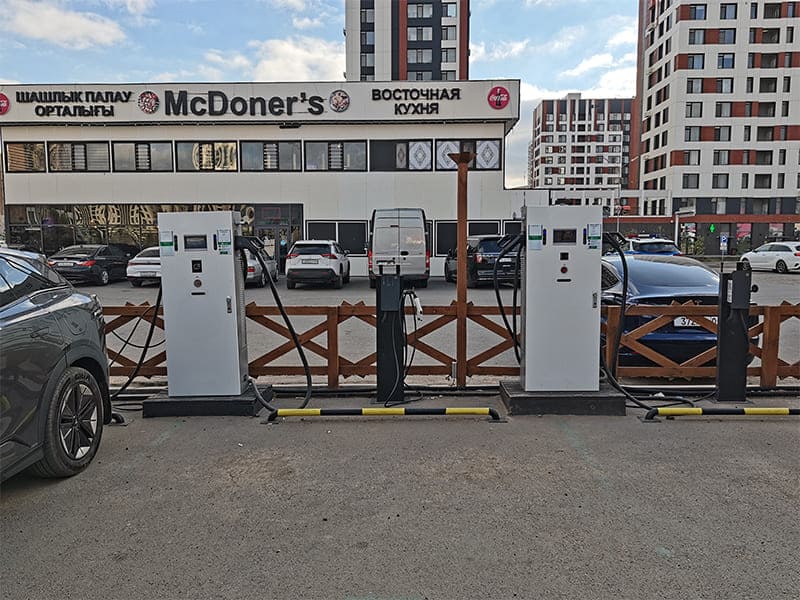
Fast DC chargers are for high-traffic areas. They serve supermarket and office parking lots. Furthermore, they are essential for highway service areas. Public area and residential parking need them. Similarly, hospital and school parking lots use them. Shopping malls and large fleets rely on them. These locations form the core EV charger business.
Technical Specifications of DC Chargers
DC chargers have diverse power outputs. Options range from 20-40kW for shorter stops. Moreover, 60-120kW units are very popular. High-traffic sites need 120-240kW power. The most powerful reach 60-320kW. They support multiple plug types like CCS1 and CCS2. Additionally, GB/T, CHAdeMO, and NACS are common. They come with dual or triple guns. Some even feature four-gun setups. Split-type designs offer great flexibility.
Commercial AC EV Charger Profile
AC EV chargers are for slower charging. They are ideal for long-duration parking. Typical locations include corporate garages. Furthermore, they suit residential community car parks. Businesses use them for employee vehicles. Connector types include Type 1 and Type 2. Also, GB/T and NACS are supported. Power levels are 7kW, 11kW, or 22kW. They are a stable EV charger business segment.
Solar-Storage Charging Stations
This segment is innovative and growing. It is perfect for large parking facilities. Areas with high electricity costs benefit greatly. It also helps regions with weak power grids. Solar panels collect energy from the sun. This energy is stored in large batteries. Subsequently, it powers the EV charging stations. This model significantly cuts operational expenses.
Home Charging Segment Overview
The home charging market is also growing. DC fast options are now available. For example, 20kW/30kW one-click chargers exist. They are user-friendly and charge quickly. Their price point is increasingly affordable. This attracts many residential customers.
Competitive Landscape and Differentiation
Next, study the existing competition. Identify major and local players. Analyze their market share and offerings. Then, define your unique value proposition. Perhaps you offer superior technology. Alternatively, focus on exceptional customer service. Maybe your pricing strategy is more competitive. Differentiation is key in the EV charger business.
Aegen as a Strategic Partner
Aegen is a proficient manufacturer in this field. They produce complete EV charging stations. Additionally, they supply all necessary components. They provide complimentary technical support. They also offer extensive customization services. They collaborate with many global distributors. They also partner with assembly companies. Aegen’s products reach multiple continents. Their markets include Central Asia and the Middle East. Furthermore, they serve Europe and South America. Their products are widely deployed and trusted. They have earned high client satisfaction. They also manufacture EV charging testers. These are supplied to installers and assemblers.
Regulatory and Infrastructure Considerations
Always review local regulations and standards. Building codes and permits are essential. Electrical grid capacity is a critical factor. Furthermore, consider installation costs and timelines. Partnering with experienced firms helps greatly. Companies like Aegen provide necessary support. This ensures compliance and smooth operations. Where to use car battery charger?
Financial Modeling and Revenue Streams
Develop a detailed financial model. Project your initial investment costs. Estimate ongoing operational expenses. Identify diverse revenue streams clearly. These include charging fees for service. Additionally, consider maintenance contracts. Advertising and data services also offer income. A realistic model is vital for the EV charger business.
In conclusion, evaluating the EV charger business potential is complex. It requires analyzing demand, competition, and regulations. Partnering with reliable manufacturers is crucial. Companies like Aegen provide a strong foundation. This emerging market offers significant rewards. Careful planning leads to sustainable success.