
Selecting a trustworthy manufacturer for a DC EV charger is crucial. This decision impacts operational efficiency and long-term reliability. A good partner ensures quality and support. This guide will help you choose wisely.
Understanding Your Charging Needs
First, clearly define your specific application requirements. Commercial settings demand different solutions than residential ones. Therefore, assess the primary use case thoroughly. For instance, fleet operations need robust, high-power units. Conversely, public areas may prioritize user accessibility.
Key Selection Criteria for a DC EV Charger Manufacturer
Several factors determine a manufacturer’s reliability. You must evaluate their technical capability and market reputation. Furthermore, consider their production capacity and quality control.
Manufacturer’s Experience and Reputation
Always check the company’s industry track record. A long-standing presence often indicates stability. Look for client testimonials and project portfolios. Moreover, review their history in exporting products globally. For example, Aegen has extensive experience. They supply components and full charging stations. Their products are used across continents successfully.
Product Quality and Certifications
High-quality components are essential for any DC EV charger. Ensure the manufacturer holds relevant international certifications. These certifications guarantee safety and performance standards. Additionally, inspect their testing procedures for each unit. Aegen provides technically supported components. They ensure all products meet stringent quality benchmarks.
Technical Support and Customization
Reliable manufacturers offer strong after-sales service. Technical support should be readily accessible. Many also provide customization options. Consequently, you can get a DC EV charger tailored to your needs. Aegen offers free technical support. They also supply customized services for partners.
Range of Commercial Charging Solutions
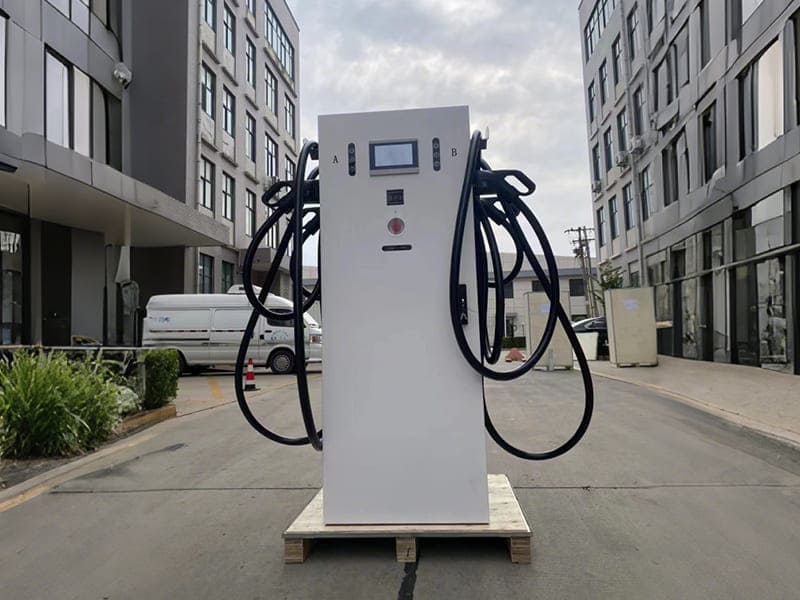
Commercial DC EV charger stations serve various locations. These include shopping malls and office buildings. They also include highway rest stops and public areas. Furthermore, residential complexes and hospitals use them. Similarly, parking lots, schools, and large fleets are common sites. Power levels vary widely to meet demand. Options include 20kW, 60kW, 120kW, and 240kW models. Connector types must also be considered. Common plugs are CCS2, CCS1, GB/T, CHAdeMO, and NACS. What are the Key Features of a Durable AC EV Charger for Public Use?
Complementary AC EV Charger Options
AC chargers are vital for different scenarios. They are ideal for garages and residential parking. Additionally, corporate campuses utilize them. These locations allow for extended or overnight charging. Popular connector types include Type 1, Type 2, GB/T, and NACS. A versatile manufacturer supplies both AC and DC EV charger systems.
Exploring Home EV Charger Varieties
Home charging solutions are equally diverse. They cater to different user preferences and power needs.
DC Fast Home Charger: Some homes can install a fast DC EV charger. Models like 20kW or 30kW offer rapid charging. They often feature simple one-touch start functions.
AC Wallbox Charger: These are the most common home units. Power levels include 7kW, 11kW, and 22kW. They are mounted on a wall for convenient daily use.
Portable EV Charger: For maximum flexibility, portable chargers are excellent. They offer lower power, such as 3.5kW, 7kW, or 11kW. Users can plug them into standard outlets.
Aegen: A Partner in EV Charging
Aegen is a Chinese manufacturer specializing in EV charging station. They produce both components and complete charging piles. Their services include free technical support. They also offer customization for specific client needs. Aegen collaborates with various distributors and installers. They also supply parts or full stations to assembly companies. Their DC EV charger products are sold globally. They operate in Central Asia, the Middle East, Europe, and South America.
Making the Final Decision
In conclusion, choosing a manufacturer requires careful research. Prioritize experience, quality, and support. Ensure their product range matches your application needs. A reliable partner like Aegen can provide a dependable DC EV charger. Ultimately, this secures a successful and sustainable EV infrastructure project.