
This article explores commercial static EV charger costs. Prices vary significantly. Key factors influence final investment. We will analyze these elements thoroughly. Aegen specializes in this technology. We provide complete charging solutions. Our core units power many global stations.
Understanding Static EV Charger Pricing
First, “static” means fixed installation. Therefore, a static EV charger is not mobile. Commercial units demand robust construction. Consequently, costs exceed residential chargers. Key components dictate base pricing. For example, power output is crucial. Higher power typically means higher cost. Connectivity features also add expense. Additionally, installation complexities affect price. Permitting and labor vary by location. So, a precise figure is challenging. However, we provide clear guidance.
Core Cost Factor: Power & Configuration
Power rating is the primary cost driver. Commercial DC stations offer various outputs. Aegen produces 20-40kW models. These suit lower traffic locations. Next, 60-120kW units are common. They balance speed and cost. Furthermore, 120-240kW chargers serve highways. Ultimately, 60-320kW systems offer maximum flexibility. Configuration also matters greatly. For instance, dual-gun models increase usability. Triple or quadruple heads serve more vehicles. Meanwhile, split-system designs optimize space. Each choice impacts the static EV charger station price.
Cost Factor: Connector Types
Connector standards influence cost. Aegen units feature multiple options. CCS1 & CCS2 are popular globally. CHAdeMO remains relevant for some fleets. Moreover, GB/T is essential for specific markets. Finally, NACS adoption is growing rapidly. Offering multiple connectors increases versatility. However, it also raises unit costs. Selecting the right combination is vital. This ensures compatibility with regional fleets. Therefore, consider your local vehicle mix.
Typical Price Ranges Explained
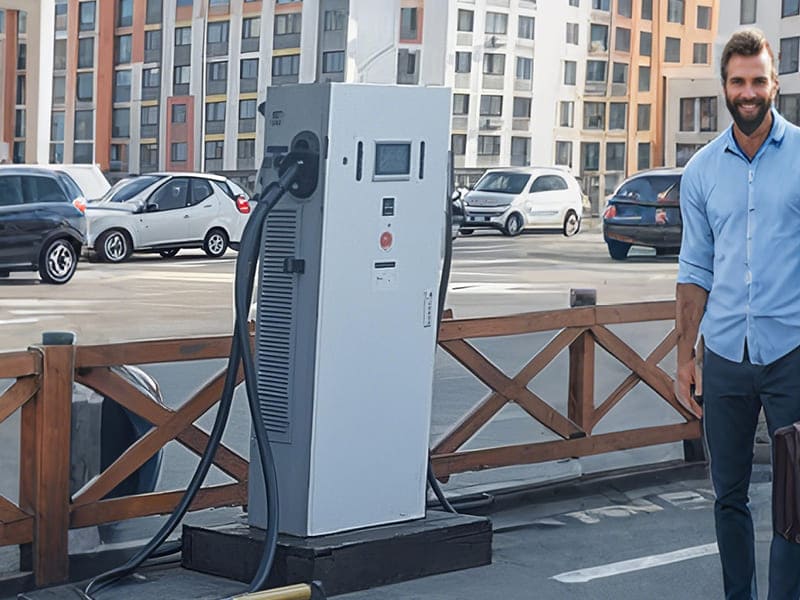
So, what are the actual price ranges? Entry-level DC EV charging stations start lower. However, commercial-grade models are investments. Generally, 60-120kW static Electric Vehicle charger costs range significantly. Prices include hardware but often exclude installation. Higher-power 180-350kW units cost more. They require substantial electrical infrastructure. Thus, total project costs can double. We advise getting detailed site assessments. Aegen partners provide these quotes.
AC Commercial Charger Costs
Commercial AC static EV charger options are different. They are for longer parking durations. Aegen offers Type 1 & Type 2 connectors. We also provide GB/T and NACS AC plugs. Power levels include 7kW, 11kW, and 22kW. Single and dual-gun models are available. These static Electric Vehicle charger units are less expensive. However, they deliver slower charging speeds. They are perfect for workplaces. Hotels and residential complexes also use them.
The Aegen Advantage: Core Technology
Aegen self-develops the core CCU. This charging control unit is critical. It is the brain of the static Electric Vehicle charger. Many global manufacturers use our CCUs. This in-house development ensures reliability. It also lets us control costs effectively. Consequently, we offer competitive pricing. Our technical support is always free. Customization services are also available.
Beyond Hardware: Installation & Operational Costs
Remember, hardware is just one part. Professional installation is a major cost. Electrical upgrades can be very expensive. For example, trenching and transformers add cost. Similarly, ongoing network fees exist. Maintenance and software subscriptions matter too. Therefore, consider the total cost of ownership. Aegen works with certified installers globally. They can provide accurate site quotes.
Specialized Solutions: Solar & Storage
Aegen also builds solar-integrated charging stations. These are ideal for high-cost electricity areas. They also help unstable grids. Photovoltaic systems collect solar energy. Then, batteries store this power. Finally, the static EV charger uses it. This setup reduces operating expenses. Initial investment is higher though. Long-term savings can be substantial.
Economical Options: Simplified DC Chargers
We offer simplified DC fast chargers too. These 20kW or 30kW units are cost-effective. They feature one-button start operation. They are simpler and more affordable. This static EV charger model suits budget-conscious projects. It works for commercial or residential use. It provides a quick charging solution.
Ensuring Reliability with Testing
Aegen produces EV charger testers. Our partners use them for installation. They also ensure ongoing communication integrity. This prevents costly operational failures. Reliable testing guarantees customer satisfaction. It is a crucial part of our ecosystem. What is the main difference between a type 1 vs type 2 EV charger?
Global Reach and Recognition
Aegen products sell across continents. We serve Central Asia and the Middle East. Our chargers operate throughout Europe. South American projects also use them. Client feedback has been highly positive. This global experience informs our design. We understand diverse market needs.
Conclusion: A Strategic Investment
In conclusion, commercial static EV charger costs vary. Power, configuration, and location are key. Aegen provides a full range of solutions. From AC units to high-power DC systems. We even offer solar storage options. Our core technology ensures durability and value. Partner with us for your charging project. Contact Aegen or our distributors today. Let’s build the future of charging together.