
Strategic positioning transforms how a Germany EV charger performs. A Germany EV charger sees higher use when placed with purpose. Location decisions directly affect overall station efficiency.
The Power of Smart Location
Placement determines success for any Germany EV charger network. High-traffic retail hubs demand reliable fast-charging options. Large supermarkets benefit from visible and accessible units. Shopping centers see increased dwell time with charging available. Home improvement stores also capture customer attention effectively.
Transition words help clarify these patterns. For instance, a Germany Electric Vehicle charger near a highway exit serves travelers best. Additionally, airport parking lots require high-power solutions. Consequently, utilization rises when drivers find chargers conveniently.
Matching Charger Type to Site
Different locations need different charger specifications. A Germany EV charger in a city center should offer speed. Urban drivers often prefer compact and quick solutions.
The 20&30 kW fast DC home EV charger works wonderfully. This model offers simple operation and fast charging speed. It provides great value for both residential and light commercial spaces. Families appreciate its reliability for daily driving needs.
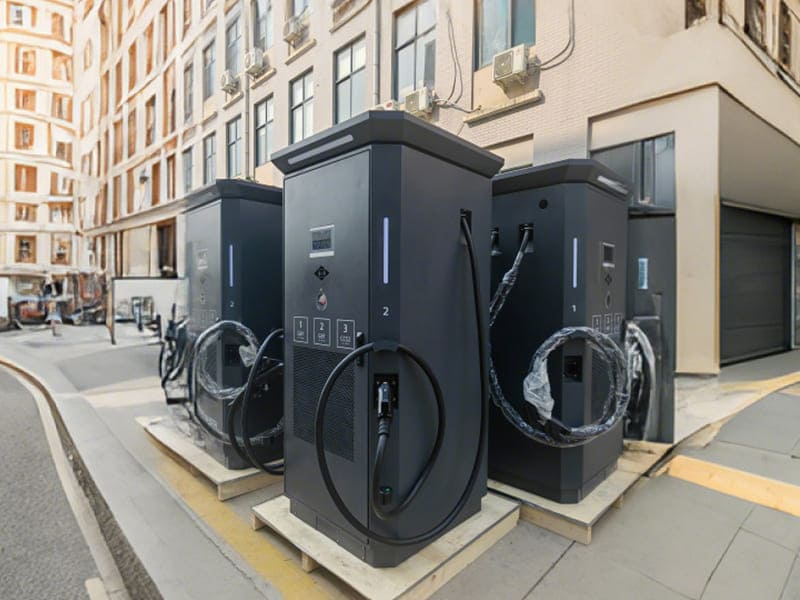
In contrast, commercial sites demand more robust equipment. A commercial DC fast EV charging station comes in various power levels. Options include 20–40 kW, 60–120 kW, and 120–240 kW models. High-demand locations may require 60–320 kW configurations. These stations often feature dual, triple, or four-plug setups. Such flexibility accommodates multiple vehicles at once.
Furthermore, split-type charging stations suit large parking areas. These units reach 480 kW, 720 kW, or even 960 kW. They excel at highways, bus depots, and logistics centers.
Connector Compatibility Matters
A Germany EV charger must support diverse vehicle types. Connector options include CCS2, CCS1, GB/T, CHAdeMO, and NACS. This broad compatibility ensures no driver is left out.
Therefore, a Germany EV charger in a public space gains trust. Drivers know they can charge regardless of car model. This confidence directly boosts utilization rates over time.
Real-World Applications
High-flow retail and service centers show strong demand. Large supermarkets, shopping malls, and home centers lead adoption. Transportation hubs also require consistent charging availability. Airports, train stations, and highway rest areas fit this category. City parking lots serve daily commuters and visitors alike.
Similarly, corporate campuses and government offices benefit greatly. Hotels and residential complexes attract overnight charging users. Fleet operators rely on depots for logistics and taxis. Bus stations and car dealerships complete the ecosystem. Even restaurants, cinemas, and stadiums see growing charger usage.
Aegen’s Role in the Market
Aegen manufactures complete charging stations and key components. The company provides free technical support with all products. Customization options are available to meet specific needs.
Aegen partners with EV charger distributors and installation firms. Collaboration also extends to EV charger station assembly companies. These partnerships ensure smooth deployment across regions. EV charger 22kw : Choosing the Right Spot to Maximize Your ROI
Aegen’s products already serve Central Asia, the Middle East, and Europe. South America also benefits from Aegen’s reliable technology. Additionally, Aegen produces EV charging testers for installers. These tools help assembly partners maintain high quality.
Conclusion
Strategic placement of a Germany Electric Vehicle charger drives real results. High-traffic zones, compatible connectors, and varied power levels matter. Accordingly, a Germany EV charger in the right spot sees frequent use. Ultimately, smart siting turns infrastructure into a valuable asset. A Germany EV charger placed wisely serves drivers and investors alike.