As Aegen, we understand global charging standards deeply. Our perspective is unique. We produce diverse charging stations ourselves. The CCS1 EV charger is a key connector type. We will explore its role today. It competes directly with CCS2 and GB/T. Each standard has distinct regional strengths. This analysis compares their technical and market profiles.
Regional Dominance and Connector Design
Firstly, geographical adoption varies greatly. The CCS1 EV charger is primarily North American. Conversely, CCS2 is the European standard. Meanwhile, GB/T dominates the Chinese market. These are not interchangeable systems. Physically, connectors differ significantly. The CCS1 EV charger station uses a separate top J1772 connector. However, CCS2 integrates AC and DC pins seamlessly. GB/T features a different pin arrangement entirely. Consequently, compatibility is region-specific.
Power and Communication Protocols
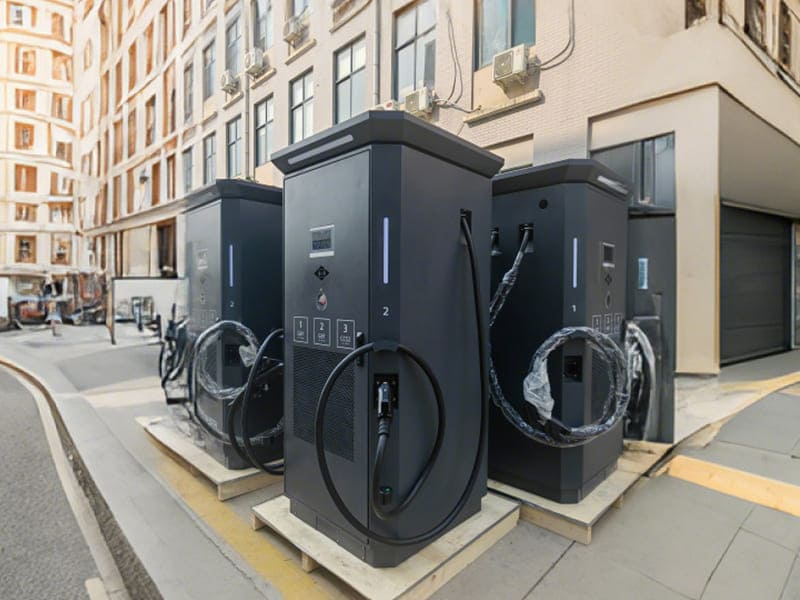
Furthermore, power capabilities are largely similar. Modern CCS1 Electric Vehicle charger models support high-power charging. Similarly, CCS2 and GB/T also deliver high currents. For instance, our Aegen 60-320kW charging stations serve all standards. However, communication protocols differ underneath. The CCS1 EV charging station uses ISO 15118 in North America. Meanwhile, CCS2 employs the same standard in Europe. GB/T relies on its own Chinese protocol suite. Therefore, our Aegen EV charger tester is essential. It validates communication for each standard.
Market Application and Aegen’s Role
Moreover, application landscapes influence choice. The CCS1 EV charger suits North American deployments. These include shopping centers and highways. Conversely, CCS2 fits European infrastructure projects. Similarly, GB/T is mandatory for Chinese networks. As Aegen, we supply all connector types globally. We serve markets from the Middle East to South America. Our clients highly appreciate this flexibility. We provide complete stations and technical support.
Core Technology and Customization
Additionally, our core technology enables this. Aegen self-developed the core charging control unit (CCU). It is the heart of our systems. This CCU manages various connector types efficiently. It powers the reliable CCS1 Electric Vehicle charger outlet. It also controls CCS2 and GB/T seamlessly. Therefore, most market CCUs come from our company. We also offer extensive customization services. Partners can request specific plug configurations. We deliver dual, triple, or even quad-head dispensers.
Future Outlook and Interoperability
Finally, the future remains dynamic. The CCS1 EV charger market is stable currently. However, global interoperability is a growing discussion. CCS2 is spreading to new regions like Oceania. Meanwhile, GB/T is focused inwardly on China. As a manufacturer, we monitor these trends closely. We ensure our products meet evolving demands. Our modular designs allow for future upgrades. Thus, investment in any standard is secure with Aegen. What’s The Difference Between CCS, NACS And CHAdeMO EV charger?
In conclusion, each standard serves its region effectively. The CCS1 EV charger is robust for the Americas. CCS2 excels in Europe and expanding territories. GB/T is the powerhouse of China. Aegen provides superior equipment for all. We ensure reliable performance everywhere. Our stations power diverse global mobility seamlessly.