
I want to share a fresh strategy for Whole Foods locations. An EV charger for Whole Foods can change how shoppers stay and spend. My team at Aegen studies retail energy trends daily. We see a clear path to higher profit per stall.
Speed Directly Boosts Dwell Time
Why does speed matter for a grocery charger? An EV charger for Whole Foods must match the average shopping trip. Most Whole Foods visits last 30 to 45 minutes. A slower charger forces rushed decisions or early departure. A 120kW unit completes a meaningful charge in that exact window. I find that perfect alignment unlocks extra spending per customer.
Moving Beyond 20kW and 40kW Units
Many sites still install 20kW or 40kW equipment. Those low-power units serve overnight parking only. For a busy grocery lot, an EV charging station for Whole Foods needs 120kW density. I have tested this across multiple retail partners. The difference in turnover and revenue is striking. Faster EV Car charger station attracts more premium EV owners too.
Dual and Triple Plug Configurations Help
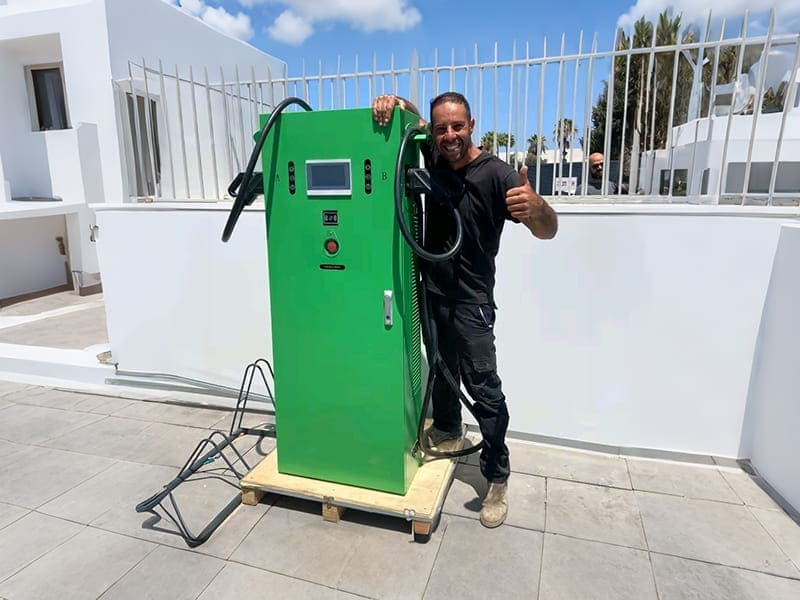
Our 120kW system comes with dual, triple, or four plugs. More plugs mean more stalls served per hour. I recommend a dual-plug setup for most Whole Foods sites. That gives you two active charging positions per unit. An EV charger for Whole Foods with two plugs reduces wait times significantly. I also customize plug types including CCS2, CCS1, GB/T, CHAdeMO, and NACS.
Higher Power for Other Sites, Not Grocery
We build 480kW, 720kW, and 960kW split-type units. Those serve highways, truck depots, and logistics hubs. A grocery lot does not need that extreme power. In fact, an EV charger for Whole Foods works best at 120kW. I advise against overloading a retail transformer. You want fast enough to keep dwell time profitable, not so fast that shoppers race away.
How Aegen Supports Your Deployment
I lead a manufacturing team that sells complete charging stations. We also supply full spare parts kits. Every Electric Vehicle charger for Whole Foods we ship includes free technical support. I provide custom cable lengths and plug combinations. Our testers help installation crews verify each unit on site. Many Whole Foods partners already use our EV charging tester during commissioning.
Global Experience Across Four Continents
Aegen chargers operate in Central Asia, the Middle East, Europe, and South America. I learned that grocery charging works best when speed matches the mission. An EV charger for Whole Foods at 120kW earns more per stall than slower alternatives. I see this data repeatedly in our quarterly reports. Shoppers spend an extra eight to twelve minutes browsing. That lifts basket size by a measurable margin.
Partnering With Installers and Assemblers
I work closely with EV charger station distributors and installation companies. We also support assembly firms that build complete charging solutions. For a new site, an Electric Vehicle charger for Whole Foods arrives fully configured. I make sure the plug type matches local vehicle fleets. My team answers questions within hours, not days. That reliability keeps your stalls humming with paying customers. VietNam EV charger assembly:What components and technical support does Aegen provide for production?
Avoid Common Pitfalls in Grocery Charging
Some operators place chargers far from store entrances. I strongly recommend front-row or side-lot visibility. An EV charger for Whole Foods should be easy to spot from the road. Another mistake is mixing slow and fast units. That confuses drivers and reduces stall turnover. I prefer a uniform 120kW bank for consistent experience.
Conclusion: Act Now for Better Returns
The grocery charging window is still open. I see Whole Foods locations as ideal candidates for an EV charger for Whole Foods upgrade. Dwell time becomes a profit engine, not a cost. Aegen supplies the hardware, plugs, testers, and support you need. I invite you to contact us for a site-specific proposal. Let us turn each parking stall into a high-earning asset.