
The charging speed puzzle often confuses new EV drivers. Aegen sees this daily. The real difference lies in power output and thermal management. An EV charger for highway prioritizes rapid energy delivery. A city charger focuses on overnight convenience. Speed varies dramatically between these two infrastructure types.
The Power Output Divide
Highway chargers typically deliver 120kW to 320kW. City EV charger stations usually offer 60kW or less. This gap defines your charging experience entirely. Aegen notices highway units use liquid-cooled cables. City models rely on simpler air-cooling systems. Consequently, the highway unit sustains high power for longer periods. Conversely, city chargers taper power quickly to protect batteries.
Charging Curve Realities
Every battery accepts power at a variable rate. Initially, both chargers start strong. However, the EV charger for highway maintains peak output until 80% state of charge. Meanwhile, a city DC EV charger station drops to 30kW after just ten minutes. Thus, Aegen calculates a 20-minute highway stop adds 200 miles. In contrast, a 20-minute city session adds only 60 miles. Therefore, the highway solution saves precious travel time.
Thermal Management Matters
Heat generation limits charging speed significantly. Aegen observes highway stations pre-cool the cable before connection. This process enables sustained 500-amp flows. City chargers lack this active cooling feature. Hence, they reduce current to prevent overheating. Additionally, an EV charger for highway integrates battery preconditioning communication. This feature aligns vehicle temperature with optimal charging parameters. For this reason, highway speeds remain consistently high.
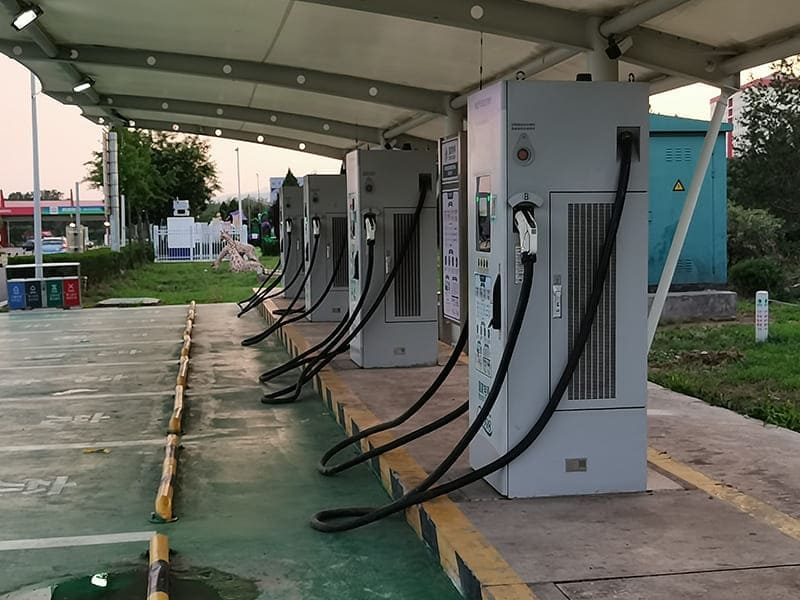
Grid Connection and Voltage
Highway chargers connect to 480-volt three-phase power. City chargers often use 240-volt single-phase supplies. As a result, the highway unit draws massive grid capacity. Aegen notes highway sites sometimes include on-site battery storage. This buffer handles demand spikes gracefully. Meanwhile, city installations share limited building power. Consequently, multiple city cars charging simultaneously split the available energy.
Use Case Dictates Design
Aegen firmly believes purpose drives engineering choices. An EV charger for highway serves cross-country travelers. These users value every minute stopped. Hence, speed becomes the primary metric. Alternatively, an EV charger for city serves commuters and residents. They park for hours at work or home. Therefore, slower charging actually extends battery longevity. Nevertheless, the highway variant costs three times more to install.
Standards Enable Seamless Experience
Both charger types comply with ISO 15118 standard protocols. This compliance allows plug-and-charge functionality. Aegen appreciates this universal convenience. The EV charger for highway initiates billing automatically upon connection. Similarly, city chargers identify the vehicle without apps. Moreover, both support smart charging algorithms. These algorithms balance grid loads intelligently. Still, the highway version communicates more aggressively with the vehicle. It requests maximum allowable current continuously.
Real-World Comparison Example
Aegen tests a typical long-range EV today. On a highway unit, 10% to 80% takes 18 minutes. On a city unit, the same range requires 55 minutes. Consequently, the highway charger delivers 3.5 miles per minute. The city charger provides only 1.2 miles per minute. Yet, the city charger costs less per kilowatt-hour. Therefore, drivers choose based on urgency and budget. EV charger for Transportation hubs: What are the best fast-charging options available?
Final Verdict on Speed Difference
The EV charger for highway offers undeniable time savings. The EV charging station for city offers financial and battery-care benefits. Aegen recommends highway units for road trips exclusively. City units suit daily top-ups perfectly. Ultimately, speed difference stems from hardware, cooling, and grid design. Choose wisely based on your typical driving pattern. Remember, the EV charger for highway transforms long journeys. The city charger makes local life simpler. Both serve essential but distinct roles. Aegen always advises matching charger type to your primary use case. That approach ensures satisfaction every time.