
Many drivers now use an EV charger 200kw at public stations. I see this daily at my work. Aegen designs and sells these powerful units. We support installers worldwide. Our clients include Central Asia, the Middle East, Europe, and South America. But a common question arises. How does power split between two cars? Let me explain clearly.
The Basic Rule of Shared Power
First, understand the station’s total capacity. An EV charger 200kw has a fixed maximum output. When one car connects, it gets full power. That means 200kw straight to that vehicle. However, a second car changes everything. The station must divide the available energy. This happens intelligently, not randomly.
Static vs. Dynamic Splitting
Two main methods exist for an Electric Vehicle charger 200kw. Static splitting gives each car exactly 100kw. No more, no less. Dynamic splitting adjusts in real time. For example, Car A might need 150kw. Car B might need only 50kw. The EV charger station 200kw then allocates accordingly. I prefer dynamic splitting. It respects each battery’s state of charge.
How Aegen Configures the 200kw Unit
Our EV charger 200kw uses dynamic load balancing. I program this feature carefully. First, the system checks both vehicles. Then it reads their requested power. Finally, it distributes energy fairly. But fairness does not always mean equal. A nearly full battery charges slowly. An empty battery demands high power. So my Electric Vehicle charger 200kw prioritizes the emptier battery first.
Real Example From My Installation Work
Last month, I tested an 200kw EV charger in Brazil parking lot. Two EVs plugged in simultaneously. One was a long-range sedan at 10% battery. The other was a compact car at 80% battery. My EV charging station 200kw gave 160kw to the sedan. It gave only 40kw to the compact. Within ten minutes, both reached 50% capacity. Then the split changed to 100kw each. This dynamic method saves time for everyone.
What Happens When One Car Finishes?
Here the EV charger 200kw becomes even smarter. Once Car B reaches its target, the station releases all power to Car A. Transition words like therefore and consequently apply. Therefore, the remaining vehicle suddenly receives 200kw again. Consequently, its final charging stage speeds up. I have observed this hundreds of times. No drama, just efficient logic.
Hardware Requirements for Proper Splitting
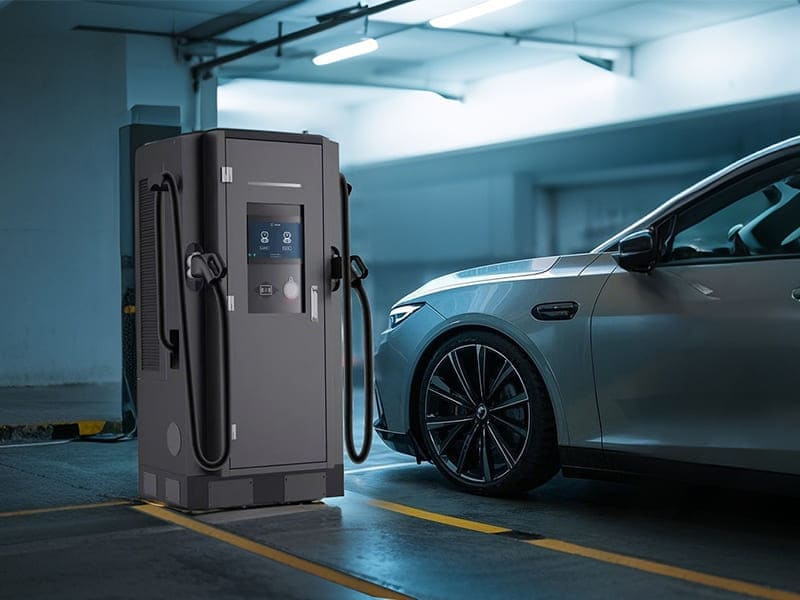
A quality Electric Vehicle charger 200kw needs multiple plugs. Ours come with dual, triple, or even four connectors. We support CCS2, CCS1, GB/T, CHAdeMO, and NACS. You choose the plug type. I customize each order. For a dual-plug EV charging station 200kw, both cables share the internal power module. For a triple-plug version, three cars can connect. But total power never exceeds 200kw. That is the physical limit.
Aegen also builds 480kw, 720kw, and 960kw split-type stations. These suit highways and logistics hubs. A 480kw unit powers four 120kw outputs. A 720kw unit gives six 120kw outputs. But my focus today is the EV charger 200kw. Why? Because it fits most urban scenarios. Two cars sharing 200kw works perfectly for grocery stops or office parking.
Testing the Split Function With Our Tester
I always verify power splits before delivery. Aegen produces the EV charger tester. This device simulates two connected vehicles. It measures each output precisely. For an EV charger 200kw, I run a 24-hour split test. The tester reports any imbalance. Consequently, I adjust the software. Meanwhile, the installer gets a certified report. This prevents field failures.
Common Misconceptions to Avoid
Some buyers think an EV charger 200kw gives each car 200kw. That is impossible. The total inp ut limits the output. Others believe splitting halves the speed permanently. Not true with dynamic balancing. I repeat: my EV charging station 200kw adapts continuously. Another myth: older cars cannot share. Actually, any car with a standard protocol works fine. We match the plug, and the station handles the rest.
Practical Advice for Station Owners
If you buy an Electric Vehicle charger 200kw, plan your parking layout. Two spaces should share one unit. Otherwise, you waste cables. Also, set clear pricing for shared sessions. I recommend per-minute or per-kwh rates. Finally, use our free technical support. We help configure the split parameters. For example, you can set a minimum guaranteed power per vehicle. I suggest 40kw minimum. That prevents one car from starving completely. EV charger for Hotel Mixed-Use: Integrating DC Fast Charging for Short Stays & AC for Overnight Guests.
Future of Power Splitting
Next-generation EV charger 200kw units will use AI predictions. The system will learn driver habits. It will pre-allocate power based on arrival times. Aegen is already prototyping this. Meanwhile, our current 200kw model remains reliable. I ship it worldwide every week. From Kazakhstan to Brazil, drivers share power seamlessly.
Final Word From Aegen
Do not fear the split. An EV charger 200kw manages it automatically. I design every unit for fairness and speed. Remember to order the correct plug type. Use our tester for verification. And contact me for custom requirements. Together, we keep EVs moving.