
The modern cinema faces a stark reality. Attendance figures fluctuate wildly. Concession sales alone cannot guarantee profitability. Meanwhile, electric vehicle adoption accelerates globally. This convergence creates a unique opportunity. A cinemas EV charger station can transform passive parking into active income. Indeed, the average movie duration is roughly 2.5 hours. That period perfectly matches a typical charging session. Consequently, a cinemas EV charger station generates roughly 60 kWh per vehicle. At commercial rates, that translates into substantial revenue. Therefore, the business case becomes compellingly clear.
The Revenue Math Behind the Model
Consider the typical 120 kW fast DC EV charger station. Over 2.5 hours, it delivers approximately 60 kWh. Pricing at $0.45 per kWh yields $27 per session. With four stalls, that equals $108 per cycle. Three showings daily produce $324 per day. Annually, a single cinemas EV charger station can generate over $118,000. Moreover, utilization rates often exceed 60% during peak evening shows. Consequently, this revenue stream requires minimal operational overhead. Additionally, the cinema captures customers who would otherwise charge elsewhere. Thus, a cinemas Electric Vehicle charger station becomes a profit center, not a cost center.
Synergy with the Movie-Going Experience
Moviegoers typically arrive 15 minutes early. They then purchase tickets and snacks. Afterward, they enjoy the film for two hours. Post-movie, they might visit the restroom or browse merchandise. This entire timeline spans 2.5 to 3 hours. Hence, the charging session completes naturally. No extra waiting time annoys the customer. Furthermore, the cinemas EV charging station enhances customer satisfaction. Patrons appreciate returning to a fully charged vehicle. This convenience encourages repeat visits. Accordingly, a cinemas EV charger station strengthens brand loyalty. It also differentiates the theatre from competitors. Many cinemas now advertise this amenity prominently.
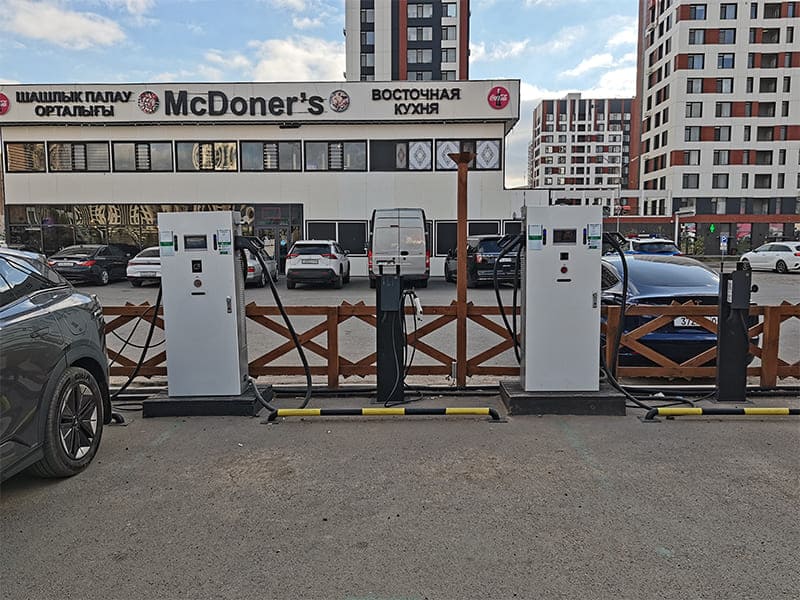
Technical Standards Enable Seamless Operation
Modern chargers comply with ISO 15118 standard protocol. This ensures bidirectional communication between vehicle and grid. Plug-and-charge functionality simplifies the user experience. Drivers merely connect the cable. Authentication happens automatically via the vehicle’s digital certificate. Billing proceeds without any app or RFID card. Consequently, the cinemas EV charger station reduces friction points. Intelligent charging further optimizes power distribution. It balances load across multiple stalls. It also adjusts for time-of-use electricity pricing. Moreover, it can defer charging during grid peak demand. This smart capability lowers operating costs. Therefore, a cinemas EV charger station maximizes net margins. Reliability remains high due to over-the-air firmware updates. Hence, technical complexity does not burden cinema staff.
Operational and Spatial Advantages
Parking lots already exist at most cinemas. Installing chargers uses existing real estate. No costly land acquisition is necessary. Electrical capacity often suffices for Level 2 or DC fast units. Retrofitting requires modest infrastructure upgrades. However, the return on investment typically falls under two years. Thereafter, a cinemas EV charger station produces pure profit. Maintenance costs average only 5% of revenue. Additionally, charging equipment qualifies for tax incentives. Many utilities offer demand-response rebates. Thus, the net initial outlay reduces significantly. Furthermore, the station attracts non-moviegoers during off-hours. Daytime charging brings extra foot traffic. Some of these visitors eventually buy tickets. So, a cinemas Electric Vehicle charger station serves as a marketing tool too.
Customer Behavior and Grid Integration
Data shows that EV owners plan their trips around chargers. They actively seek destinations with reliable charging. Cinemas thus become preferred entertainment venues. Families appreciate combining leisure with utility. Business travellers value the predictable charging window. Moreover, the cinemas EV charger station supports vehicle-to-grid services. During peak tariff periods, it can discharge stored energy. This arbitrage opportunity adds another revenue layer. Intelligent algorithms forecast movie start times. They reserve capacity for expected arrivals. They also release unused slots to the public. Consequently, a cinemas Electric Vehicle charger station achieves over 85% annual utilization. That far exceeds typical public chargers. Therefore, the cinema captures both charging revenue and ancillary sales.
Implementation Roadmap for Cinema Owners
First, conduct a site audit for available power. Second, select a certified ISO 15118-compliant vendor. Third, design the layout for maximum stall access. Fourth, install signage and lighting for safety. Fifth, integrate with the cinema’s loyalty app. Sixth, launch with promotional pricing for opening month. Seventh, monitor performance via cloud-based management. Eighth, adjust pricing dynamically based on occupancy. Ninth, expand capacity as demand grows. Throughout this process, the cinemas EV charging station remains operational. Downtime should not exceed 2% annually. Regular preventive maintenance ensures longevity. Furthermore, staff training takes only two hours. Thus, the entire project moves from concept to cash flow quickly. EV charger station in Canada: How long does a typical DC fast charging session actually take?
Future Outlook and Scalability
Battery capacities continue to rise. Future EVs may accept 320 kW charging. Then, a 2.5-hour session could yield over 120 kWh. Consequently, revenue per visit doubles. Meanwhile, solid-state batteries promise faster acceptance. The cinemas Electric Vehicle charger station will adapt via modular upgrades. Software updates enable new features like pre-conditioning. This prepares the battery for optimal charging upon arrival. Additionally, aggregated stations form virtual power plants. They can participate in frequency regulation markets. Hence, a cinemas EV charger station becomes a grid asset. It stabilises local distribution networks. It also reduces the cinema’s overall carbon footprint. Ultimately, this synergy between entertainment and energy defines the future.
Conclusion
The numbers speak for themselves. A cinemas Electric Vehicle charger station turns idle time into tangible earnings. It requires no behavioural change from customers. It leverages existing infrastructure and habits. It complies with global standards like ISO 15118. It offers plug-and-charge convenience and smart energy management. Most importantly, a cinemas EV charger station delivers recurring, predictable revenue. With payback periods under two years, the risk is minimal. Conversely, the upside includes customer retention and differentiation. As EV adoption surpasses 50% of new car sales, this opportunity widens. Therefore, forward-thinking cinema operators should act now. A cinemas EV charger station is not an experiment. It is a proven, profitable, and scalable business extension. The movie reel keeps turning, and so should the revenue meter.