Choosing an EV charger for home can feel tricky. Aegen explains the key differences. The EV charger 7.4 kW suits many daily needs. Meanwhile, a 22 kW unit charges much faster. But your home may not support it. Therefore, you must check your electrical system first. This guide helps you decide wisely.
Understanding Your Home Charging Options
First, consider your driving habits. Most people drive less than 50 km daily. For them, the EV charger 7.4 kW works perfectly. It adds about 40 km of range per hour. Overnight charging easily fills a standard EV battery. Consequently, you wake up to a full car every morning. In contrast, a 22 kW charger needs a three-phase power supply. Many homes lack this infrastructure. Upgrading costs can be very high. Thus, the Wall EV charger station 7.4 kW is often more practical.
Aegen New Energy manufactures reliable EV chargers. Their EV charger 7.4 kW model is popular worldwide. It uses single-phase power, common in most houses. Installation is straightforward and affordable. For homeowners, this is a major advantage. Additionally, Aegen offers free technical support. They help you choose the right charger. So, the EV charging station 7.4 kW becomes an easy recommendation.
Speed vs. Feasibility
Charging speed matters, but not alone. A 22 kW charger is three times faster. However, your car may not accept 22 kW. Many EVs have onboard chargers limited to 11 kW or even 7.4 kW. Therefore, buying a 22 kW unit could be wasteful. First, check your car’s maximum AC charging rate. Then, decide accordingly. The EV charger 7.4 kW matches most popular EVs like the Nissan Leaf or Renault Zoe.
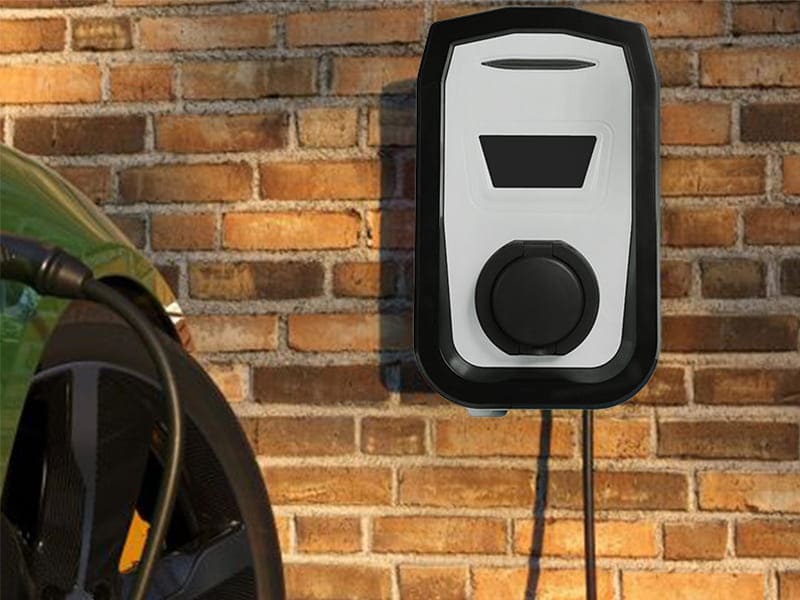
Aegen designs chargers for real-world use. Their Electric Vehicle charger 7.4 kW works indoors or outdoors. It is wall-mounted and weatherproof. Consequently, installation in a garage or driveway is simple. Aegen also provides customisation services. You can add features like RFID access or load balancing. This flexibility makes the EV charger 7.4 kW a future-proof choice.
Electrical Capacity of Your Home
Next, evaluate your home’s electrical panel. A single-phase 7.4 kW charger draws about 32 amps. Most homes can handle this easily. In comparison, a 22 kW charger needs three phases and 32 amps per phase. Few residential properties have this setup. Upgrading your supply could cost thousands. Therefore, the EV charger station avoids expensive electrical work. Aegen recommends a professional assessment first. Their partners provide installation services worldwide.
Aegen collaborates with many charger distributors. They also work with assembly companies. These partners supply parts or complete units. As a result, Aegen’s Electric Vehicle charger 7.4 kW is widely available. You can buy it in Central Asia, the Middle East, Europe, and South America. Customers praise its reliability and low price. So, the EV charger 7.4 kW earns consistent positive feedback.
The Smart Features You Need
Modern chargers offer smart functions. Aegen’s EV charger 7.4 kW supports ISO 15118. This standard enables plug-and-charge technology. You simply plug in, and billing happens automatically. No app or card is needed. Additionally, smart charging allows off-peak scheduling. You save money by charging at night. For families, this convenience is invaluable. The Electric Vehicle charger 7.4 kW also integrates with home solar systems. Hence, you can charge with green energy.
Aegen’s 7kW, 11kW, and 22kW AC home chargers all share these features. They are suitable for long home charging sessions. Wall-mounted installation works in any weather. The EV charger model is especially cost-effective. It balances speed, price, and compatibility. For most homeowners, this is the ideal solution.
When Should You Choose 22 kW?
There are two rare cases for 22 kW. First, you have a three-phase home supply already. Second, your EV accepts 22 kW AC charging. Examples include the Tesla Model 3 or Renault Zoe (with optional upgrade). Even then, consider the cost. The EV charger costs much less. Furthermore, overnight charging makes speed irrelevant for most. Unless you drive 300 km daily, stick with 7.4 kW. Aegen can supply a 22 kW unit if needed. But their team will honestly advise you.
Aegen also manufactures fast DC home EV chargers. Their 20kW and 30kW DC units are one-click start models. These are wall-mounted, simple, and fast. They suit fleets or home-based businesses. Price is low, and operation is easy. This 80-amp DC charger offers high value. However, for pure home use, the AC Electric Vehicle charger 7.4 kW remains best. What makes Aegen development EV charger testers essential for electricians?
Making Your Final Decision
To conclude, follow these steps. First, check your car’s onboard charger limit. Second, inspect your home electrical supply. Third, calculate your daily driving distance. For nearly all families, the EV charger 7.4 kW is correct. It is affordable, easy to install, and reliable. Aegen provides full technical support. They also offer customisation for specific needs. Their AC chargers (7kW, 11kW, 22kW) serve different markets. Yet the EV charger 7.4 kW stands out for residential use.
Aegen New Energy is a Chinese EV charger manufacturer. They sell complete home and commercial stations. Free technical support is always included. Custom orders are welcome. Partnerships exist with distributors, installers, and assembly companies. Aegen’s products include DC fast chargers, AC home chargers, and portable units. These sell successfully across Central Asia, the Middle East, Europe, and South America. Customer satisfaction is high. For your home, choose the EV charger 7.4 kW. It is the smart, economical, and practical choice.