
Government agencies EV charger projects often fail without proper planning. Strategic location planning makes the difference between success and waste. Many government agencies EV charger installations sit underutilized today. The primary reason is poor site selection.
Agencies must prioritize accessibility for all users. They should analyze traffic patterns before breaking ground. Consequently, underperforming chargers become expensive lessons. Effective government agencies Electric Vehicle charger programs start with data.
The Consequences of Poor Planning
In contrast, successful installations share common characteristics. They exist where drivers naturally park for extended periods. Therefore, government agencies EV charger placements should target employee parking lots. Another excellent location is public fleet vehicle depots. EV Charger in Singapore: How Smart Placement Can Double Your Returns?
Case in point: Grey County secured federal funding for twenty Level 2 chargers . Their success came from strategic placement at four County-owned sites. This approach supports their fleet transition effectively.
Understanding the Three Planning Levels
The U.S. Department of Transportation identifies three distinct planning levels :
Corridor-level planning supports interregional travel needs.
Community-level planning serves specific neighborhoods and towns.
Site-level planning focuses on individual installation locations.
Government agencies Electric Vehicle charger projects typically require community-level planning first. Subsequently, they transition to site-specific planning. This structured approach prevents costly mistakes.
Data-Driven Site Selection
Modern government agencies EV charger success depends on utilization rates. Maximizing usage requires understanding driver behavior. Factors include population density and employment centers. Parking availability and traffic volume also matter greatly.
The Joint Office of Energy and Transportation offers technical assistance . They help states develop effective deployment plans. Their resources support government agencies Electric Vehicle charger programs nationwide.
Learning from Successful Deployments
Welsh Fire and Rescue Services completed a major infrastructure rollout . They installed forty-five standard chargers across twenty-two sites. Additionally, they added high-speed fifty-kilowatt units in South Wales. Their strategic approach achieved significant emissions reductions.
Consequently, they saved over 4,000 tonnes of CO₂ lifetime emissions. Financial savings exceeded two million pounds. Government agencies EV charger projects can deliver real returns.
The Role of Quality Equipment
Selecting reliable hardware matters as much as location. Aegen manufactures durable charging solutions for demanding applications. They produce fast DC EV chargers from twenty to three hundred twenty kilowatts. Their AC chargers suit overnight parking scenarios perfectly.
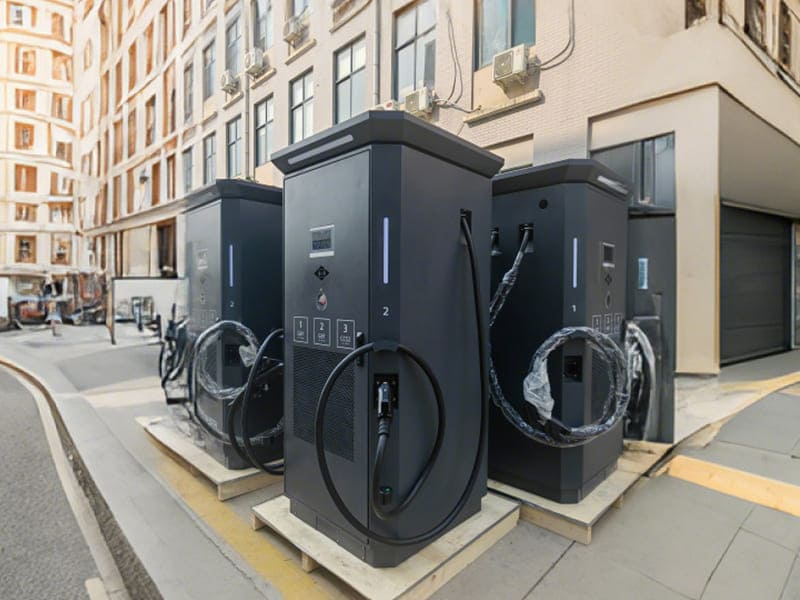
Aegen serves government agencies Electric Vehicle charger projects across multiple continents. Their equipment operates throughout Europe, South America, and the Middle East. They offer CCS2, CCS1, GB/T, CHAdeMO, and NACS connector options. This flexibility accommodates diverse fleet requirements.
Equity and Accessibility Considerations
Communities must ensure equitable charger distribution. Underserved neighborhoods need access too. The Public EV Charging station Infrastructure Playbook addresses this challenge . It helps government agencies EV charger planners engage all stakeholders.
Specifically, the Playbook contains instructional modules with best practices . These cover planning, engagement, and siting considerations.
Future-Proofing Infrastructure Investments
Government agencies Electric Vehicle charger programs should anticipate future demand. Installation costs remain significant. However, retrofitting existing infrastructure offers savings. Streetlight and utility pole mounting presents opportunities .
WRI research shows this approach can be more equitable . It also reduces overall project expenses. Government agencies EV charger planners should explore these alternatives.
Making the Business Case
Strategic siting improves financial viability. Higher utilization generates more revenue. This supports ongoing maintenance and operations. Therefore, government agencies EV charger investments become sustainable.
Aegen provides free technical support for their charging solutions. They also offer customization services for specific requirements. Their EV charging testers help installation teams verify performance.
Conclusion
Strategic location planning unlocks government agencies EV charger success. Data-driven decisions prevent underperforming assets. Learning from proven deployments accelerates program benefits. With proper planning and quality equipment from manufacturers like Aegen, agencies can build effective, sustainable charging networks.