
The electric vehicle charging standard debate is heating up. As a manufacturer at Aegen, I see this shift daily. Our industry must now compare the NACS EV Charger standard to CCS. This analysis is crucial for future infrastructure. We will explore their technical differences. We will also examine market adoption trends. Finally, we will discuss implications for charging networks. The NACS EV Charger design promises several key advantages. However, CCS has a established global footprint. This contrast defines the current competitive landscape.
Technical Design and User Experience
Firstly, the physical connector design is a major differentiator. The NACS EV Charger station utilizes a smaller, lighter connector. Consequently, it is much easier for customers to handle. In contrast, the CCS combo plug is bulkier. This often makes CCS cables heavier and less manageable. Therefore, the NACS Electric Vehicle Charger offers superior ergonomics. Additionally, the NACS standard employs a purely AC and DC design. It uses the same pins for both charging types. Conversely, CCS adds extra DC pins to an AC base. This fundamental difference streamlines the NACS EV Charging station mechanism.
Charging Performance and Reliability
Next, we must consider performance and reliability metrics. The NACS EV Charger supports very high charging power. It theoretically exceeds one megawatt for future vehicles. Currently, CCS also supports similar high-power levels. However, NACS may have a reliability edge. Its simpler connector has fewer potential failure points. Furthermore, the compact design improves durability. At Aegen, our tests confirm this robustness. For instance, our charging control unit optimizes performance for both. Yet, the NACS Electric Vehicle Charger simplicity aids consistent operation.
Market Adoption and Industry Support
Moreover, market adoption tells a compelling story. Recently, the NACS Electric Vehicle Charger gained massive automaker support. Major manufacturers like Ford and GM announced switches. Subsequently, nearly every other automaker followed suit. This created a powerful domino effect. Conversely, CCS remains dominant in Europe and elsewhere. It is the mandated standard in the European Union. So, the battle is truly North American for now. As a result, the NACS EV Charger will dominate here soon. This shift influences our production at Aegen significantly.
Implications for Charging Network Operators
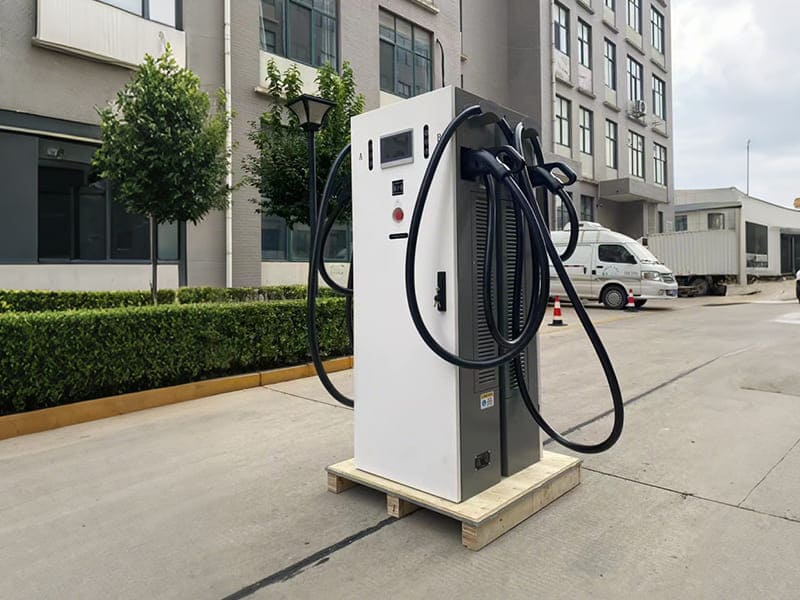
Furthermore, this shift impacts network operators deeply. They now face a substantial transition period. Many stations must offer both connectors for compatibility. Therefore, dual-cable solutions become essential. At Aegen, we specialize in such versatile hardware. For example, our commercial DC stations offer multiple plug types. They include CCS1, CCS2, GB/T, CHAdeMO, and NACS EV Charging station options. This flexibility is vital for public charging sites. Operators value this future-proofing from partners like us.
Aegen’s Role in the Evolving Landscape
At Aegen, we actively support this industry transition. We produce a wide range of charging solutions. Our product line includes DC fast chargers and AC units. We serve markets from Europe to South America. Importantly, our core charging control unit is self-developed. This core component powers many stations globally. We also manufacture critical testing equipment. Our EV charging tester ensures reliable communication. It helps installers and assemblers guarantee quality. Consequently, we understand the NACS Electric Vehicle Charger intricacies thoroughly.
Commercial Applications and Scenarios
Our commercial stations suit diverse high-traffic locations. They are perfect for retail centers and service hubs. Similarly, they serve transportation hubs and highways effectively. Furthermore, they meet needs at offices and residential areas. Fleet depots and public stations also use our products. We offer power from 20kW up to 320kW. Configurations include dual, triple, or four-plug setups. Therefore, a NACS EV Charger option integrates seamlessly. This provides operators with crucial deployment flexibility. How does CCS1 EV charger compare to CCS2 and GB/T?
Conclusion: A Coexistence Phase Ahead
In conclusion, the NACS EV Charger versus CCS debate is evolving. NACS holds clear design and usability advantages. It also has overwhelming automaker support in North America. However, CCS maintains a strong global presence. The future likely involves a long coexistence period. Infrastructure must accommodate both standards for years. At Aegen, we are committed to enabling this transition. We provide the necessary hardware and technical support. Ultimately, the goal is reliable charging for all drivers. The best standard will win through user experience and reliability.