
We at Aegen often hear this question. The promise of a 320kw EV charger is immense. But real-world performance depends on many factors. Our experience as a manufacturer provides clear insights. We design and build robust charging infrastructure. Our 320kw EV charger models are deployed globally. They serve diverse markets from Europe to South America. Customers highly appreciate their reliability and power.
Ultimately, a 320kw EV charger delivers incredible speed. However, its efficiency is a complex interplay. It involves the vehicle, the grid, and the technology.
Understanding the Peak Power Promise
Firstly, a 320kw Electric Vehicle charger represents maximum capability. This is its peak DC fast-charging output. Consequently, it can theoretically add significant range. For example, it can add up to 200 miles in 15 minutes. This assumes ideal conditions and a compatible vehicle. Nonetheless, this speed revolutionizes long-distance travel. It makes EV adoption more practical for fleets. Therefore, its impact on commercial transport is substantial.
The Vehicle’s Role: The Ultimate Limiting Factor
However, the car’s battery is the true boss. The 320kw EV charger can only supply available power. The vehicle’s Battery Management System (BMS) controls intake. Modern EVs have sophisticated charging curves. They typically peak only for a short period. Subsequently, power tapers off to protect the battery. So, while the 320kw EV charging station is ready, the car may not always accept the full rate.
Battery State and Temperature Are Key
Furthermore, battery condition drastically affects charging. A cold battery charges very slowly. Conversely, a battery at an ideal temperature performs best. Therefore, pre-conditioning is a critical step. Many modern cars do this automatically when navigating to a charger. This ensures the 320kw Electric Vehicle charger can operate near its potential. Similarly, a very high or low state of charge slows the rate. The sweet spot is usually between 10% and 60%.
Real-World Charging Speeds: A More Realistic Picture
So, what speeds can drivers actually expect? Typically, you will not see a sustained 320kw. Instead, expect a high average over a session. For instance, a compatible EV might start at 280kw. It could hold above 250kw for several minutes. Then, it will gradually decrease. Overall, a 10-80% charge might take 20-25 minutes. This is still remarkably fast. It significantly outperforms lower-powered chargers.
Efficiency and Energy Loss During Fast Charging
Moreover, efficiency is a crucial metric. Not all energy from the 320kw EV charger reaches the battery. Some is lost as heat in the cables and systems. Advanced cooling systems in our chargers minimize this loss. Generally, efficiency remains high, often above 95%. This means most power is effectively transferred. Therefore, operators and drivers get good value.
Aegen’s Perspective on Deployment and Use
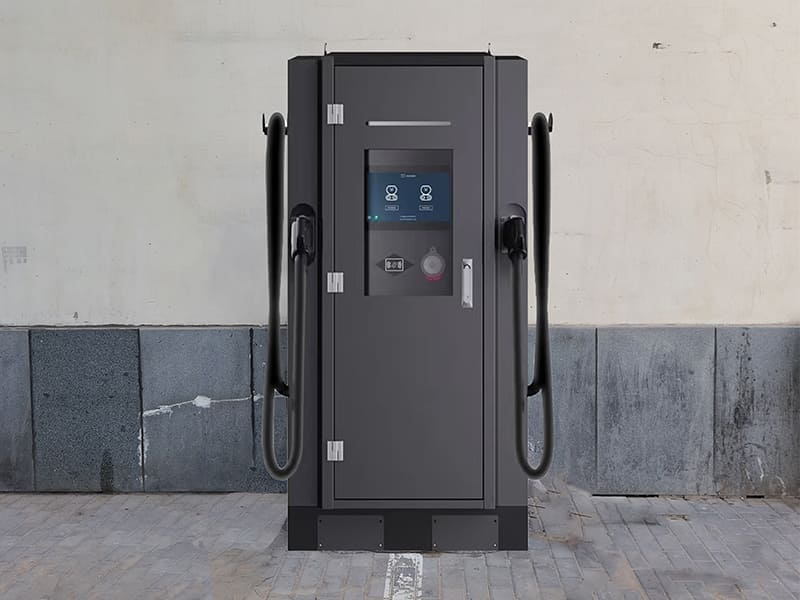
We at Aegen see where these chargers excel. Our commercial DC stations are built for high demand. They are perfect for highway service areas and large fleet depots. Our 320kw Electric Vehicle charger models feature multiple connectors like CCS1, CCS2, and NACS. They often have dual or four plugs. This allows for serving more vehicles simultaneously. Consequently, station throughput and revenue increase.
The Grid Connection and Power Source
Additionally, the local electrical grid is fundamental. A 320kw EV charger requires a strong grid connection. Otherwise, it cannot deliver its full power consistently. In areas with weak grids, we offer integrated solutions. For example, our solar-powered charging stations with storage are ideal. They collect and store energy locally. Then, they release it to the chargers. This saves costs and stabilizes the grid. What are the key specifications to look for in a commercial car EV charger?
Conclusion: A Powerful Tool in the EV Ecosystem
In conclusion, the real-world performance of a 320kw EV charger is impressive. It provides ultra-fast charging under the right conditions. While peak power is brief, the average speed transforms the EV experience. As a manufacturer, we are committed to advancing this technology. We provide full technical support and customization. Ultimately, these chargers are vital for the future of electric mobility. They make refueling as quick and convenient as needed.