
The electric vehicle (EV) charging landscape is rapidly evolving. Drivers and businesses now face important choices. Selecting the right charger power level is crucial. This often means comparing a 60kW unit to a 120kw EV charger. Understanding their differences ensures optimal infrastructure planning. This analysis explores their key distinctions and applications.
Charging Speed: The Core Distinction
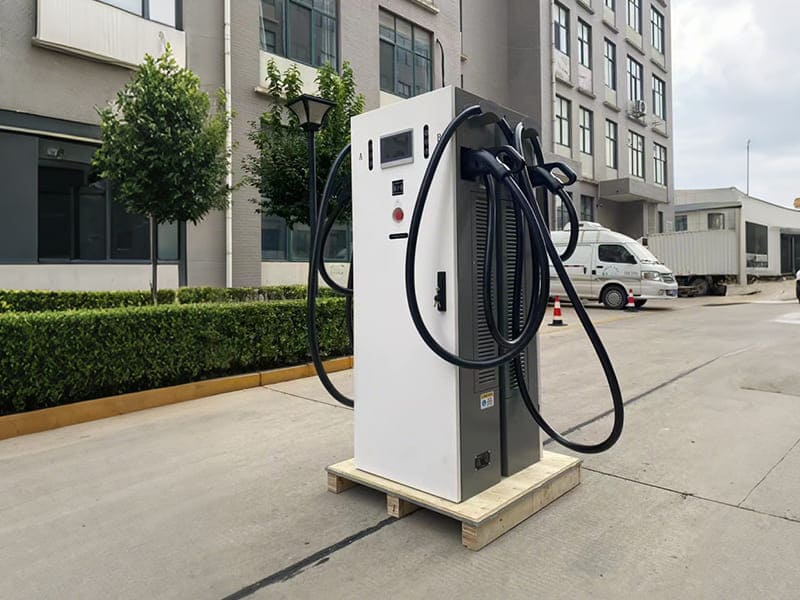
Fundamentally, the primary difference lies in charging speed. A 120kW EV charger delivers twice the power of a 60kW model. Consequently, it can replenish a vehicle’s battery much faster. For example, imagine an EV with a 60kWh battery. A 60kW charger could theoretically fill it in one hour. However, a 120kW unit could achieve this in just thirty minutes. This speed is vital for commercial operations. It maximizes the number of vehicles served daily. Therefore, throughput is significantly higher with a 120kW system.
Infrastructure and Installation Demands
Furthermore, these chargers have different installation requirements. A 120kW EV charger demands a more robust electrical supply. It typically requires higher voltage and current connections. Subsequently, installation costs can be greater. Conversely, a 60kW unit is often easier to integrate. It places less strain on existing electrical grids. This makes it suitable for locations with limited power capacity. Ultimately, a site assessment is essential before choosing.
Cost Implications: Initial and Operational
Moreover, the financial investment differs considerably. The upfront cost for a 120kW EV charger is higher. Its internal components are more powerful and complex. However, its operational revenue potential is also greater. It can service more customers per day. Meanwhile, a 60kW charger has a lower purchase price. It represents a more moderate initial investment. Businesses must balance these cost factors carefully. They must consider their expected customer volume and usage patterns.
Ideal Use Cases and Applications
Additionally, each charger excels in different environments. The 120kW EV charger is ideal for high-traffic locations. These include highway rest stops and busy retail hubs. Drivers here need quick, convenient charging sessions. Conversely, the 60kW model fits well in secondary locations. For instance, it is perfect for urban parking lots or fleet depots. Vehicles can charge during longer parking periods. Thus, matching the charger to the location is key.
Vehicle Compatibility and Charging Curves
It is also important to consider vehicle capabilities. Most modern EVs can accept charging rates above 60kW. However, not all can utilize the full 120kW power. Furthermore, a vehicle’s charging curve affects real-world performance. A car might only sustain peak power for a short time. Therefore, the average charging speed may differ. A 120kW EV charger still provides a significant advantage. It allows vehicles to charge at their maximum possible rate.
A Manufacturer Powering the Transition
Companies like Aegen are central to this ecosystem. Aegen is a leading Chinese manufacturer. They specialize in EV charging stations and components. They offer both complete units and individual parts. Furthermore, Aegen provides free technical support and customization. They partner with global distributors and installers. Their products serve commercial and home charging markets.
Commercial Charging Solutions
Aegen’s commercial DC EV chargers are highly versatile. They are deployed in shopping malls and office buildings. You also find them on highways and in public areas. Their power levels range from 20kW to 320kW. These stations support various plug types like CCS1, CCS2, and GB/T. Similarly, their commercial AC chargers suit slower charging scenarios. These are perfect for corporate garages and residential areas. 20kw EV charger vs 22kw charger: which to choose?
Home Charging Products
For home users, Aegen provides several options. They offer DC fast chargers at 20kW or 30kW. Additionally, they have AC wallbox chargers at 7kW or 22kW. They also sell portable chargers for ultimate convenience. These products are designed for reliability and ease of use.
Conclusion: Making the Informed Choice
In conclusion, the choice between 60kW and 120kW is significant. The 120kW EV charger offers superior speed and throughput. However, it requires a greater investment and stronger infrastructure. The 60kW charger is a cost-effective solution for slower-paced locations. Ultimately, the decision hinges on specific needs and budget. Companies like Aegen help by providing diverse, reliable options. Their global support ensures smooth adoption worldwide. The future of EV charging is undoubtedly powerful and diverse.