
The adoption of electric vehicles is accelerating rapidly. Consequently, multi-unit dwellings face new challenges. They must provide adequate charging infrastructure. A key solution is the 3 phase EV charger point. This technology supports faster, more efficient charging. It is ideal for shared residential buildings. Therefore, understanding its benefits is crucial.
The Power of 3 Phase Charging
A 3 phase EV charger point offers superior power delivery. It uses three alternating currents. These currents are out of phase. This setup allows for higher power output. Typically, it enables 11kW or 22kW charging speeds. Therefore, it drastically reduces charging time. For instance, a 22kW 3 phase EV charger point is very powerful. It can charge most EVs overnight. This is perfect for residents. Moreover, it future-proofs the property. As EV batteries grow, demand will rise. Consequently, this infrastructure becomes essential.
Meeting Resident Demand Efficiently
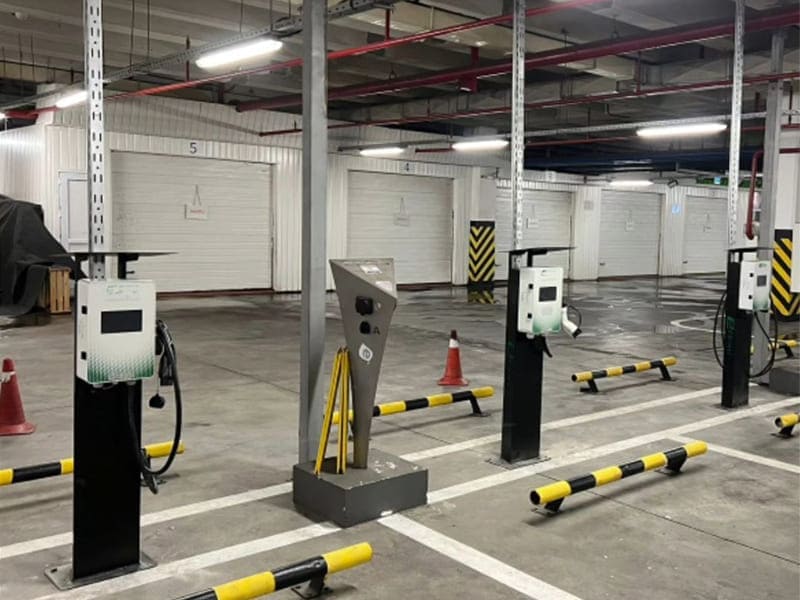
Apartments and condos have unique needs. Many residents return home simultaneously. They all need to charge their vehicles. A robust system is therefore necessary. Installing multiple 3 phase EV charger station point units is smart. This setup manages high demand effectively. Furthermore, it prevents grid overload. Smart load management can be integrated. This software balances power distribution. It prioritizes charging based on need. Thus, it maximizes efficiency for everyone.
Commercial AC Charger Solutions
For common garage applications, commercial AC chargers excel. These are often 3 phase Electric Vehicle charger point systems. They come in 7kW, 11kW, and 22kW models. Charging plugs include Type 1 and Type 2. GB/T and NACS plugs are also available. Both single and dual-gun connectors exist. These are perfect for public parking areas. They suit places with longer dwell times. Offices and residential complexes benefit greatly. Overnight charging becomes simple and reliable.
DC Fast Charging: Speed When Needed
Sometimes faster charging is required. Fast DC home EV chargers, like 20kW models, are useful. They offer quick, easy charging. Operation is often one-touch simple. These units provide high-speed power. They are cost-effective and reliable. Therefore, they are suitable for various uses. Both home and commercial settings can use them. This complements AC charging networks. However, AC 3 phase EV charger point systems are more common. They are the backbone for nightly charging.
Home Wallbox Charging Options
For personal parking spots, wallbox chargers are popular. These AC units charge slower than DC. Available types include Type 1 and Type 2. GB/T and NACS standards are also supported. Common power levels are 7kW, 11kW, and 22kW. The 22kW model usually requires a 3 phase EV charger point. Residents must select based on their car. Choosing the right plug type is crucial. This ensures compatibility and safety. Ultimately, it provides convenient home charging.
Aegen: A Comprehensive Provider
Aegen is a leading manufacturer in this field. They produce complete EV charging stations. The company also sells individual components. Notably, they provide free technical support. Customization services are available too. Aegen partners with many distributors. They also work with installation companies. Furthermore, they collaborate with charging station assemblers. Their products reach global markets successfully. These include Central Asia and the Middle East. Europe and South America also use them. Additionally, Aegen makes EV charging testers. These tools help installers and assemblers.
Scalability for Large Residential Projects
Large complexes need scalable solutions. A centralized 3 phase Electric Vehicle charger point management system helps. It allows for the monitoring of many units. Property managers can track usage easily. They can also manage access and payments. This system grows with the building. Adding more chargers is straightforward. Consequently, initial investment is protected. The infrastructure remains useful for years. It adapts to new technologies and demands. Portable vs. Wall-Mounted Single Phase EV Charger Point: Pros and Cons
Economic and Environmental Benefits
Installing this infrastructure has dual benefits. Firstly, it increases property value. Modern tenants expect EV charging. Secondly, it promotes sustainability. It reduces local emissions significantly. Using a 3 phase EV charger point is efficient. It draws power evenly from the grid. This stability is good for the network. Moreover, renewable energy can be integrated. Solar power can feed the chargers. Thus, the environmental impact lessens further.
Installation and Grid Considerations
Proper installation is vital for safety. A qualified electrician must do the work. The building’s electrical capacity must be assessed. Upgrading to three-phase power may be needed. This ensures the 3 phase EV charger point operates correctly. Additionally, future expansion should be planned. Conduits for extra cables are wise. This preparation reduces later costs and disruption. Coordination with the local utility is also key. They can confirm sufficient grid capacity.
Conclusion: A Necessary Investment
In conclusion, the 3 phase EV charger point is essential. It is the optimal solution for apartments. It delivers power efficiently and reliably. Planning and investment today are critical. They will meet the demands of tomorrow’s residents. Therefore, property developers and managers must act. Adopting this technology is a forward-thinking step. It ensures resident satisfaction and retention. Ultimately, it supports the broader EV transition. The future of mobility is electric. Multi-unit dwellings must be ready.